
Participants gathered at Rix Inclusive Research for an Inclusive Robotics Lab workshop exploring the question: How can humans communicate more naturally and inclusively with robots?
The session brought together participants with a wide range of experiences and perspectives to investigate how robots might one day support people in everyday life, such as assisting within a household, providing mobility support, assisting with communication and social interaction.
Participants explored how robotic technologies already exist around us in surprising ways. Discussions included self-driving vehicles, delivery robots, robotic lawnmowers, AI assistants, agricultural robots, robotic surgery systems, and assistive technologies designed to support disabled users.
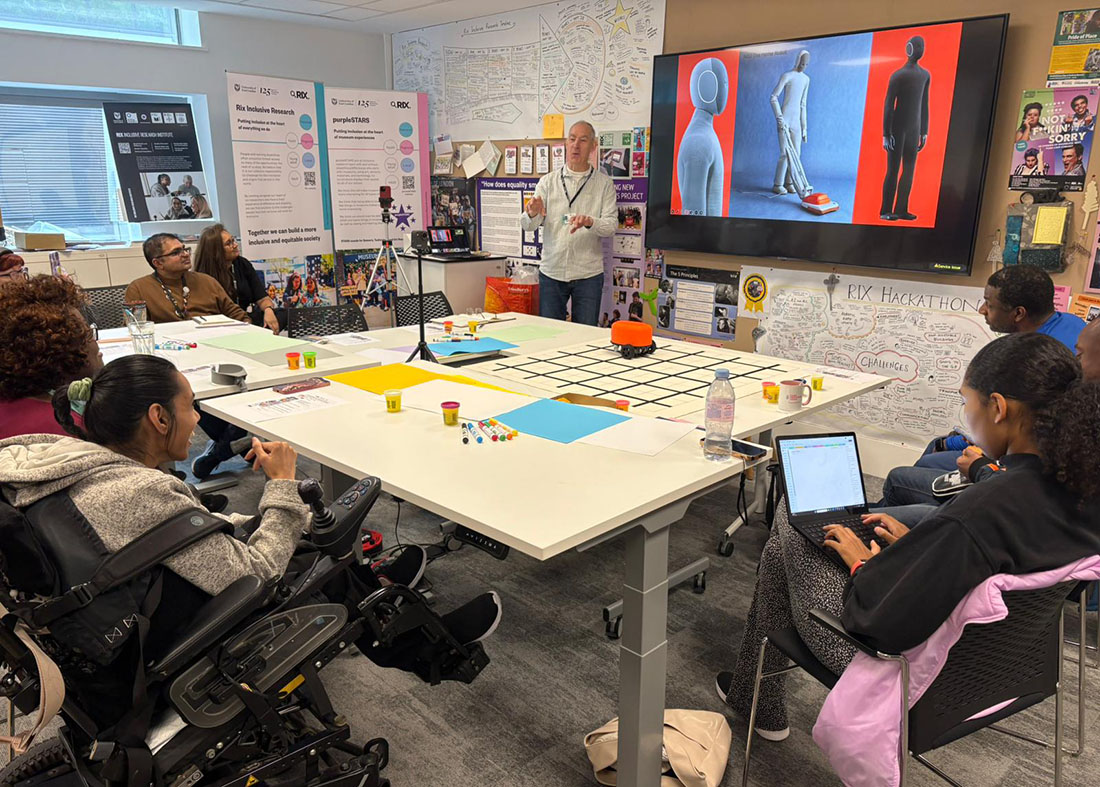
Exploring Robots in Everyday Life
The workshop began by looking at some examples of robots that are already being used around the world, and can be bought in the shops (well most of them). Participants discussed:
- home help assistive robots
- robotic vacuum cleaners
- delivery robots operating in cities
- drones used in public events
- service robots used in bars and restaurants
- robotic systems used in healthcare and surgery
The conversations around these different types of robots encouraged participants to think critically about the growing role of robotics in society and whether robots could genuinely improve our quality of life.
One particularly interesting discussion focused on assistive technologies and accessibility. Participants explored ideas such as robotic delivery systems (such as Amazon), AI-powered visual assistance tools, and robotic systems that could support people with sight, mobility or communication needs.

Designing More Inclusive Ways to Communicate With Robots
A major focus of the workshop was accessibility and inclusive design. Rather than thinking about robots purely as machines controlled through coding, participants explored many different ways humans might communicate intentions to robotic systems, including:
- voice commands
- hand gestures
- tactile interaction
- joystick controls
- symbols and emojis
- facial expressions
- storytelling
The workshop highlighted how people communicate in very different ways, and how future robotics systems should be designed to support a wide range of communication styles and access needs.
Participants shared personal experiences of using assistive technologies, voice assistants, and accessibility tools, helping shape a conversation centred on human needs rather than technology alone.
A challenge given to participants was to correctly specify the sequence of instructions to get a robot buggy sitting on a 5 x 5 grid needed to move the buggy from the bottom left corner of the grid to the top right corner of the grid, avoiding obstacles in the way.
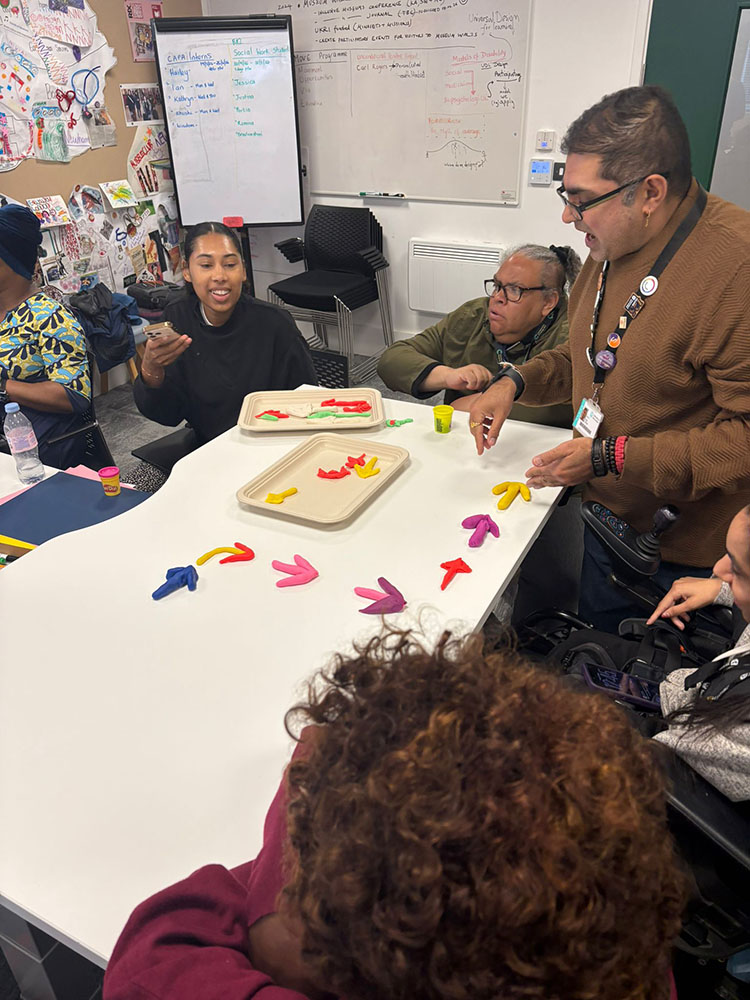
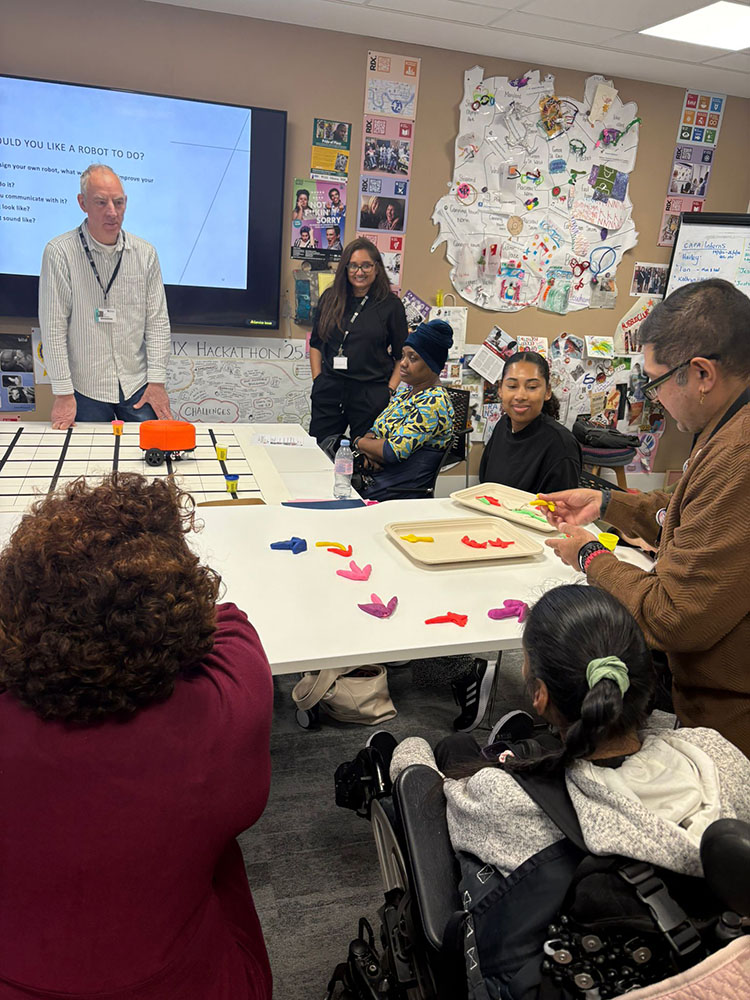
Human Robot Exercise Brings Challenges to Life
One of the most memorable parts of the session involved a practical activity where one participant acted as a robot whilst another attempted to guide them around the room using only spoken instructions or gestures.
The exercise demonstrated the difficulty of communicating with a robot. A robot or robotic system will only respond to the information given and if instructions are not communicated precisely and unambiguously, then the robot will not understand.
The activity generated lots of laughter and discussion while also introducing important ideas about programming logic, navigation, and interaction design, all of which will be explored further in future robotic buggy workshops.
Creativity, Storytelling, and Emotional Interaction
As the session progressed, the discussion became increasingly imaginative.
Participants suggested robots that could:
- help choose clothing
- assist with reading and communication
- dance with users
- respond to emotions
- or support people socially and creatively
One participant even described guiding a robotic vehicle using storytelling, imagining traffic lights, charging stations, and navigation decisions as part of a larger journey narrative. The idea being that the story itself forms the program, where elements in the story translate into moves for the robot buggy, and objects that the buggy encounters along the way are additional instructions (a bit like calling external functions in programming).
These ideas highlighted how robotics can become not only functional, but also social, expressive, and creative.
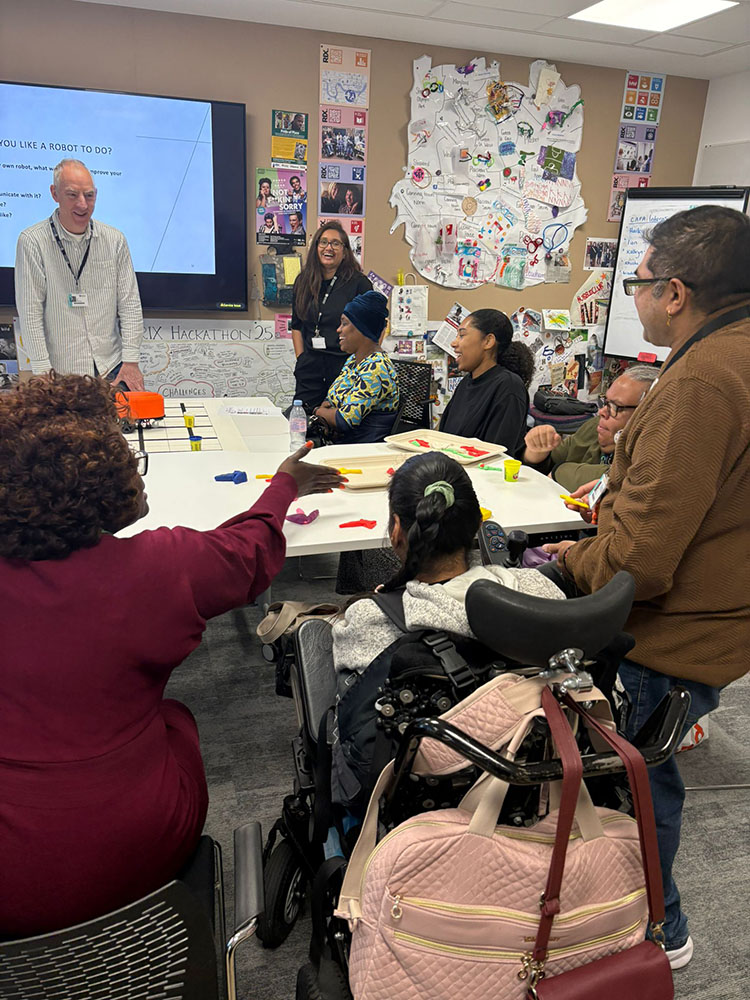
Building Foundations for Future Robotics Workshops
The Inclusive Robotics Lab workshop forms part of a wider series of sessions leading toward hands-on robotic buggy programming activities.
By starting with communication, accessibility, and human-centred design, the workshop helped participants build confidence and begin thinking critically about:
- how robots understand instructions
- how humans express intentions
- how inclusive technologies can be designed with and for everyone
The session demonstrated that robotics is not only about engineering and code: it is also about empathy, creativity, communication, and collaboration.
Further workshops will continue developing these ideas through practical experimentation and programming activities.
Ник Холлинворт