
At our Communication Café at the University of East London on 20 October 2026, first-year social work students encountered an author, a comedian and people with clear ambitions for their futures.
Jas described the five-year journey to publishing his book, persevering through setbacks with support. Koffee shared a clip from his stand-up comedy. Ajay Choksi used his RIX Wiki to share his history and vision for 2027.
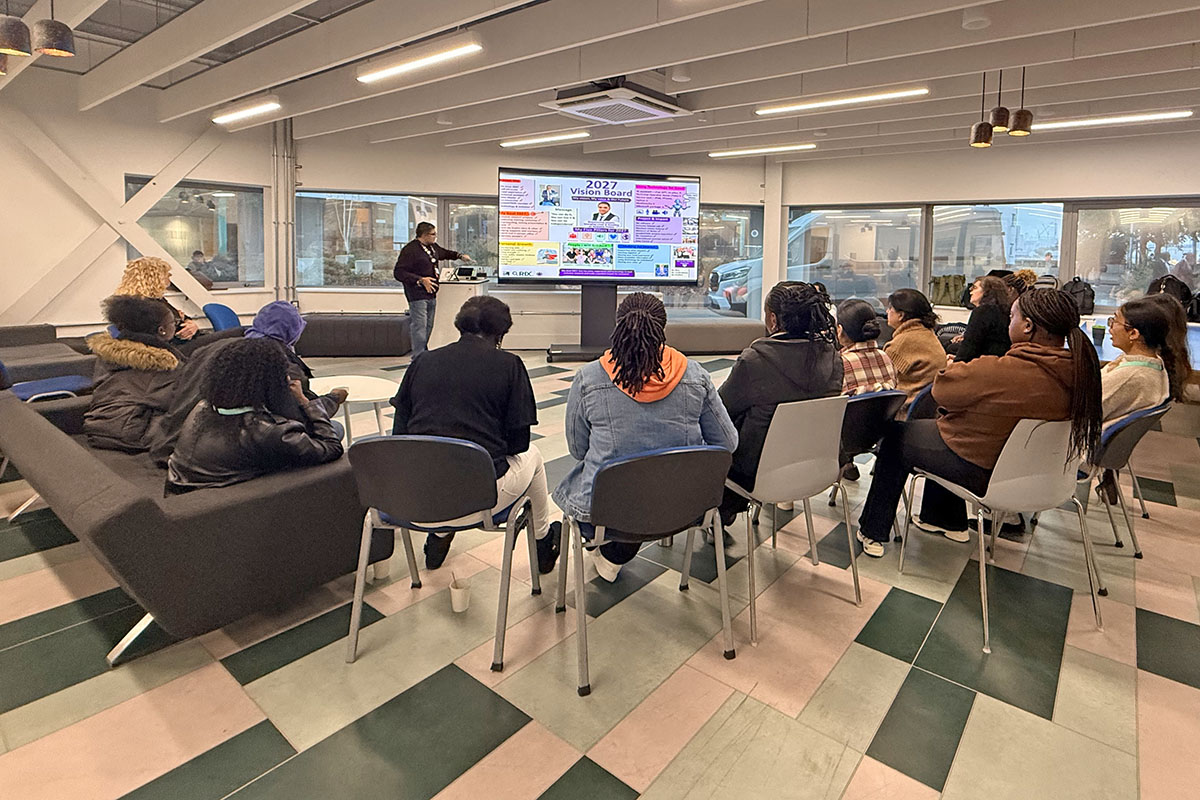
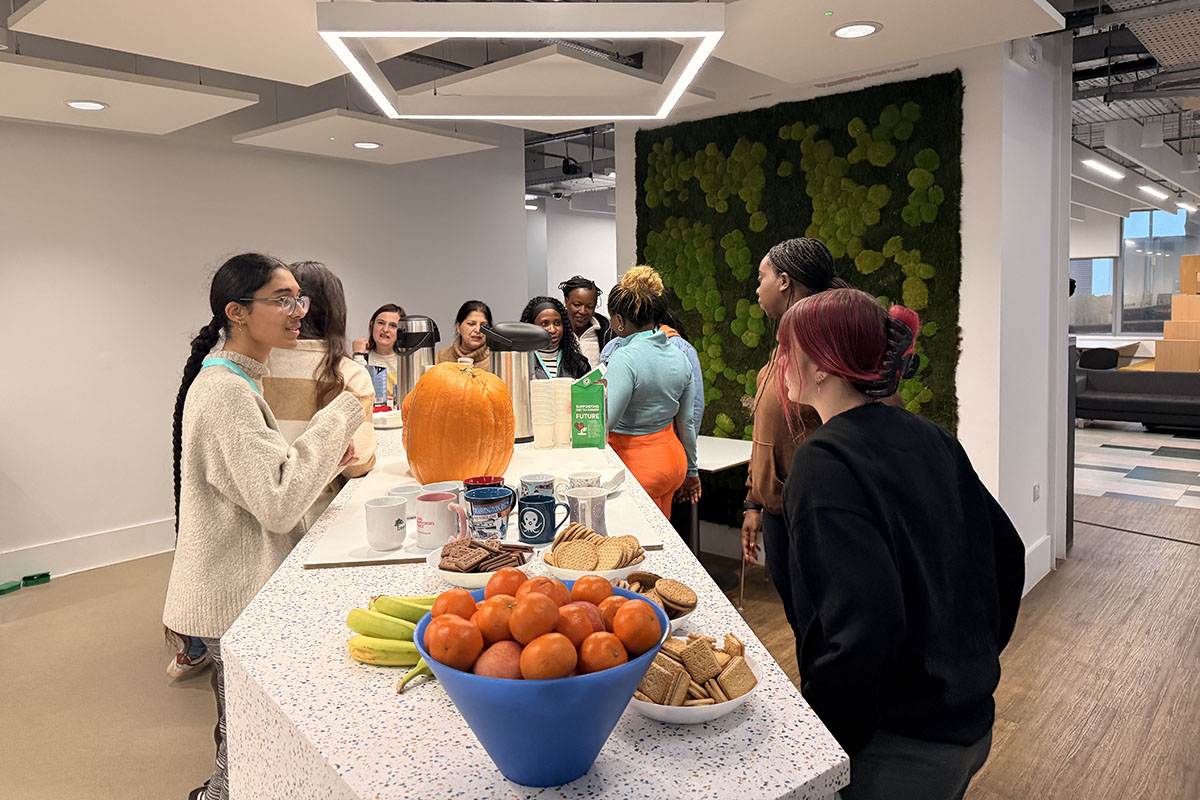
Over tea and coffee, students met people with learning disabilities, including residents from a local supported living home. There was laughter, emotion and discussion about experiences of social workers. These encounters made room for people to introduce themselves through what mattered to them, and for students to reflect on the responsibilities of their future profession.
For me, this is central to inclusive higher education: recognising whose knowledge shapes learning, and creating the conditions for people to contribute and learn together.
Learning through relationships
Across our social work programmes and work at the Rix Inclusive Research Institute, we create opportunities for students to learn directly with people with lived experience. Such learning invites students to examine how their assumptions influence communication and how professional authority is experienced by others.
Research supports its educational promise. Stanley and Webber’s review of 28 studies identified reported benefits including questioning stereotypes and connecting theory with practice. However, evidence of subsequent changes in professional practice remained limited. Their call to “evaluate skills development for students and outcomes for service users and carers” gives us an important direction for evaluation.
Our Communication Café provides one starting point. Published feedback from the 2024 café captures students’ responses. One highlighted “non-verbal skills, listening to you” and said, “I will definitely be taking what I have learned to my placement.” These reflections indicate perceived learning and intentions, rather than demonstrating changes in practice. They nevertheless identify what students found meaningful about meeting people directly.
This approach builds on the Advocacy Pathway that Kathryn Stowell and I described in our 2022 paper. Through our partnership with Charlton Park Academy, young people with profound and multiple learning disabilities contributed to social work students’ preparation for practice. Their participation challenged assumptions about who can teach, and required students to develop communication beyond spoken conversation.
Sharing the intellectual work
The Big Ideas course extends this relationship through sustained shared study. People with learning disabilities and social work students explore ideas about power, inequality and disability together. Accessible materials, discussion and activities create ways into theories often treated as the preserve of academic specialists.
На сайте my earlier account of the course, I argued for participation, voice and shared learning as central to inclusion. The evaluation helps us understand what this means to participants themselves.
Reflecting on power, Ros explained: “When I’m with my sister, I have power. She treats me like I’m an equal. She asks my opinion on stuff.” Her observation connects an abstract concept to everyday relationships. It also offers future social workers a practical insight: whose opinion is sought, and whose preferences influence what happens?
Social work student Jessica Reynolds described the course as “the same theories but from a different aspect which is extremely relevant to what we’re doing.” Learning together allowed different experiences to inform how theory was understood. Jessica also created jargon busters to support the group, illustrating how accessibility can become a shared learning practice.
Evaluating what participants value
The Big Ideas evaluation brought together Ajay, Baljit, Jessica, Kiran and Ros, facilitated by Dr Helen Evans. Using an accessible adaptation of Wenger-Trayner and Wenger-Trayner’s Value Creation Framework, the team reflected on photographs, videos and course materials, helped design interview questions and interpreted their experiences.
This matters methodologically. Participants helped determine what counted as value. Wenger-Trayner and Wenger-Trayner describe practical learning as involving “making informed decisions when complexity precludes certainty”. Their framework supports attention to what people experience, use and change through learning together.
The evaluation recorded enjoyment, intellectual curiosity and aspirations for further learning. Baljit described researching theories between sessions. Kiran said: “I’m learning more and want to learn more. I still want a black cap to get a degree.” Her words invite universities to consider the educational ambitions of people who are rarely offered opportunities for sustained academic study.
Jessica reflected: “I’ve learned it’s ok to ask for adjustments to be made.” Her account connects learning about disability with confidence in expressing her own access needs. The distinction between the student learning about inclusion and the person requiring inclusion is often much less clear than programme structures suggest.
Making participation possible
The evaluation also documented barriers. Transport arrangements caused late arrivals; room layouts affected wheelchair access; online participation depended on sound, visibility and technical support. Participants identified changes needed for future delivery. These findings show why inclusion requires attention to the whole learning experience.
Research by Bjørnerås and colleagues similarly found that co-creation with disabled university students could help participants recognise discriminatory structures and translate experience into action. Although their study concerns a different student population, it reinforces the importance of involving learners in decisions about the conditions of participation.
Our evaluation represents five people’s situated accounts. The café feedback records immediate reflections. Both offer valuable evidence, while leaving questions about longer-term outcomes open. Following students into placements, and asking people receiving support how they experience their practice, would strengthen that evidence.
For universities, the challenge is to give this work continuity, resources and academic recognition. People need accessible ways to participate, preparation and influence over how their experiences are used. Contributors should also be recognised and remunerated for their educational work, with control over what they share and opportunities to influence the curriculum beyond a single session. Above all, they need opportunities to pursue their own learning. Kiran’s ambition for a degree deserves a considered institutional response. It asks us to think seriously about who higher education is for, and what we are prepared to change so that more people can belong.
Госия Квятковска, директор RIX
References and further reading
Kwiatkowska, G. and Stowell, K. (2022). Preparing social work students for practice by involving young people with profound and multiple learning disabilities in teaching and learning. Research in Teacher Education, 12(1), 35–40. Read
Kwiatkowska, G. (2026). The RIX Big Ideas Course: rethinking learning for people with learning disabilities. Learning Disability Today, 30 April. Read
Choksi, A., Taggar, B., Reynolds, J., Dhillon, K. and Weinberg, R. (n.d.). The RIX Big Ideas Course Evaluation Report. Facilitated by Dr Helen Evans. RIX, University of East London. Report available through the evaluation article. Read
Rix Inclusive Research (2024). Communication Café 2024. Published participant and student feedback. Read
Stanley, S. and Webber, M. (2022). Systematic Review of Service User and Carer Involvement in Qualifying Social Work Education: A Decade in Retrospect. The British Journal of Social Work, 52(8), 4871–4893. Read
Wenger-Trayner, E. and Wenger-Trayner, B. (2020). Learning to Make a Difference: Value Creation in Social Learning Spaces. Cambridge University Press. Quotation from Chapter 7, Applied and Realized Value, pp. 89–97. Read
Bjørnerås, A. B., Langørgen, E., Witsø, A. E., Kvam, L., Leithaug, A.-E. and Horghagen, S. (2023, online publication). Aiming for inclusion: processes taking place in co-creation involving students with disabilities in higher education. International Journal of Inclusive Education. Read