
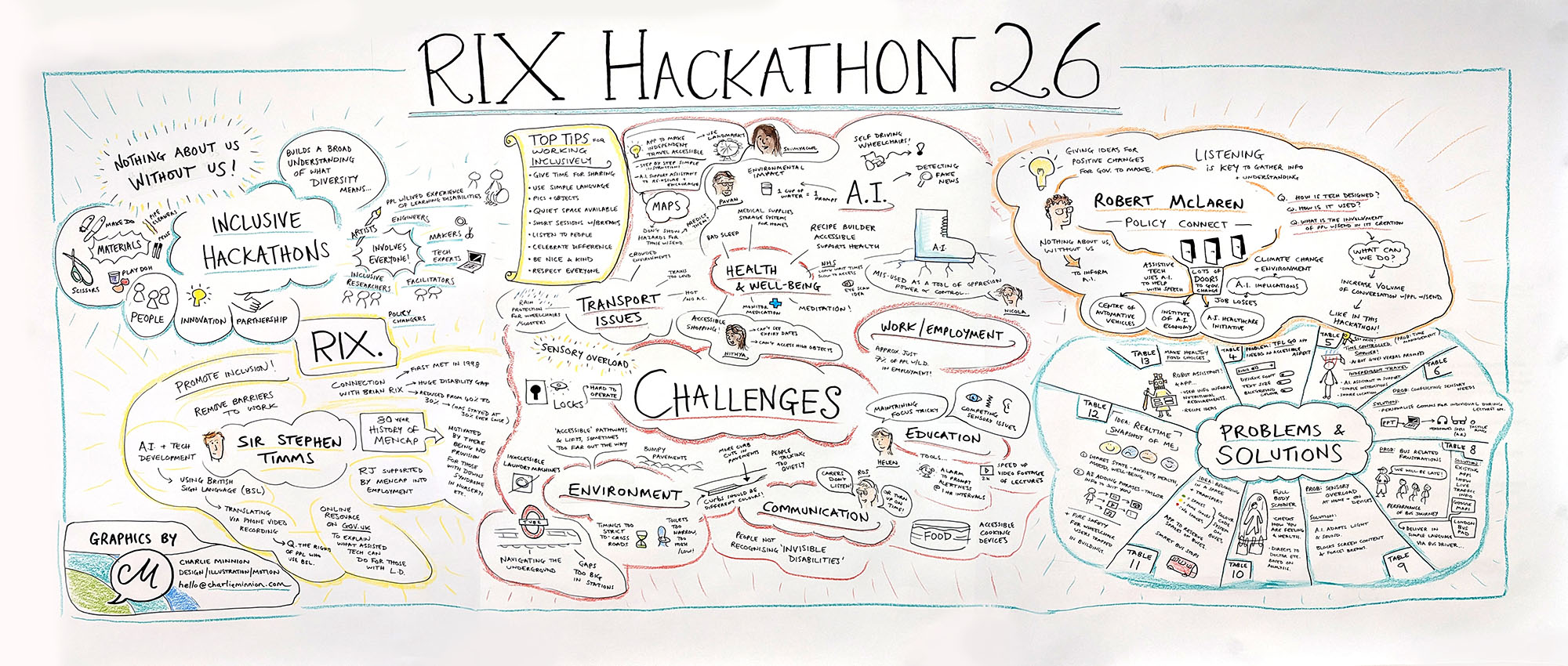
Our third annual inclusive hackathon took place on 19 June at the Royal Docks Centre for Sustainability and was attended by a diverse group of people with lived experience, UEL Summer School students, RIX interns, academic staff and other professionals.
This year we decided to focus more on the hackathon itself and less on the guest presentations in order to give more time for our partners with lived experience to participate.
We’re grateful to local MP Sir Stephen Timms, for getting us off to a great start with a rousing speech about disability inclusion and how we need to create a more level playing field for those who have been traditionally left out or overlooked.
It was also inspiring to hear from Policy Connect’s Director of Policy, Robert McLaren. Robert’s work provides a conduit to policy makers, ensuring people’s ideas and aspirations are heard at the highest level.
The theme for Hackathon26 was How can we use AI to help us find solutions to the challenges we face in life? We had prepared a list of these challenges over a number of earlier workshops with our co-researchers with lived experience and these were shared with participants using a Padlet. As in previous RIX hackathons, there was no shortage of creative solutions generated by the different small table groups.
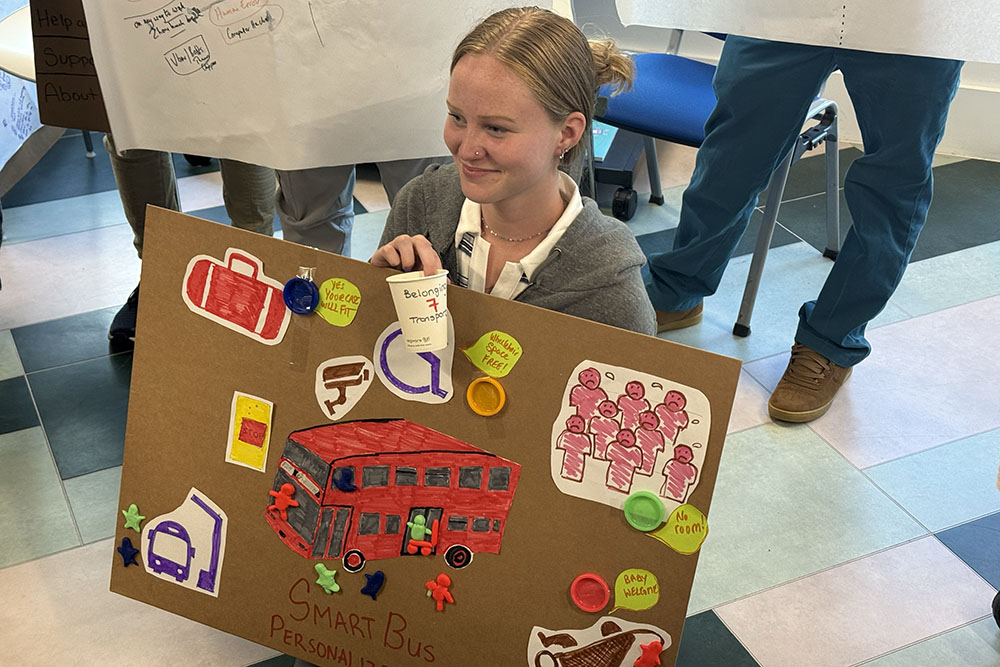
The winning solution
OnYourWay
Team OnYourWay presented not one, but two winning solutions, both designed to help people get out of the house and on their way to work, meet friends or make an important appointment.
Their first invention was a shower that gradually changes from hot to cool after a set period of time. Rather than relying on alarms or sand timers, the changing water temperature provides a gentle, sensory prompt that says, Time’s up and encourages users to move on to the next step of their routine.
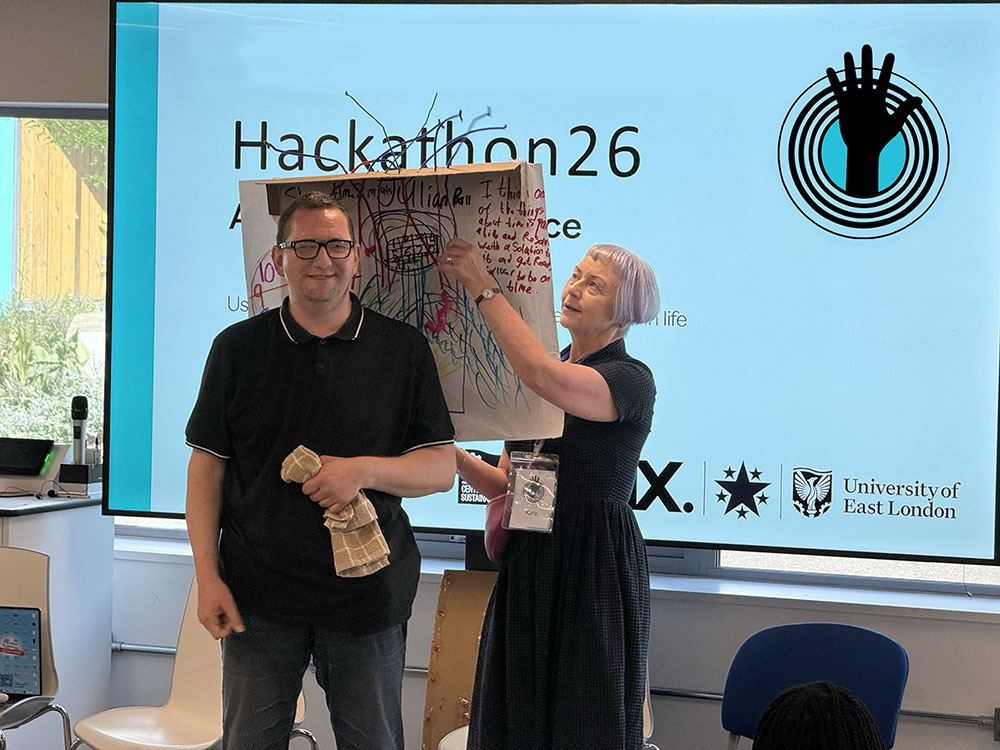
Once showered and ready, the team also designed an app that plans routes which avoid sensory overstimulation, helping users steer clear of busy roads, noisy building works and other challenging environments. The app also breaks journeys down into manageable, multisensory steps, providing reassurance and confidence along the way.
OnYourWay explored the challenge of getting somewhere on time, confidently and without anxiety. Together, both solutions formed part of a single journey, supporting users from leaving the shower to arriving at their destination.
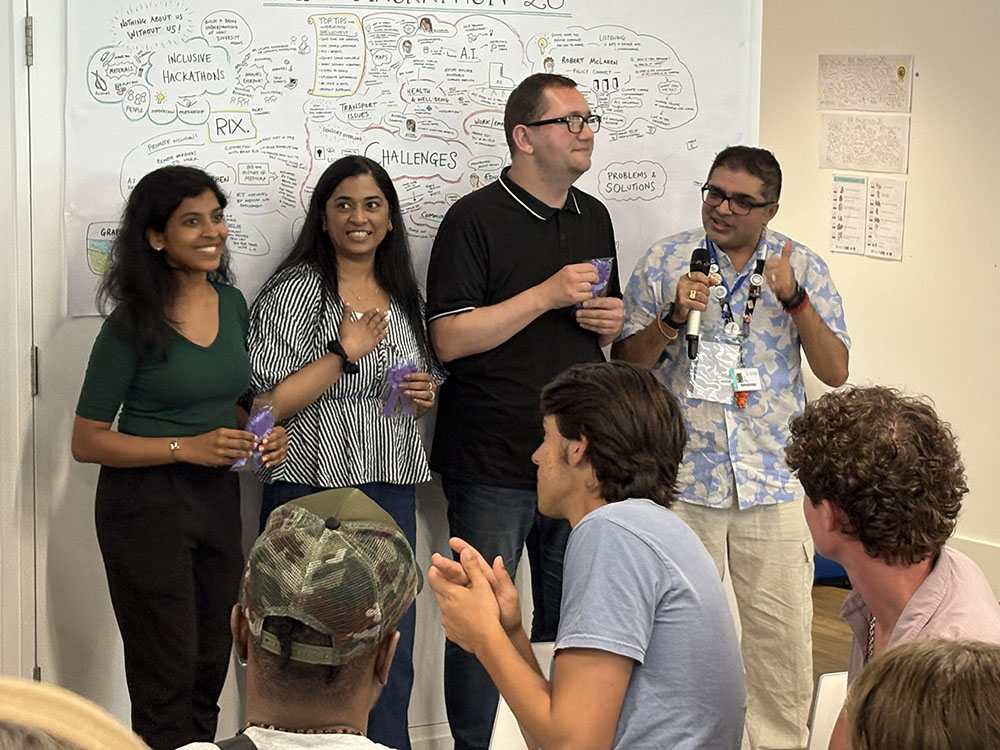
Other highly commended solutions
Snap Shot of Me
An app that captures your real-time health and wellbeing, helping users better understand how they are feeling in the moment while building a picture of their wellbeing over time.
Full Body Scanner
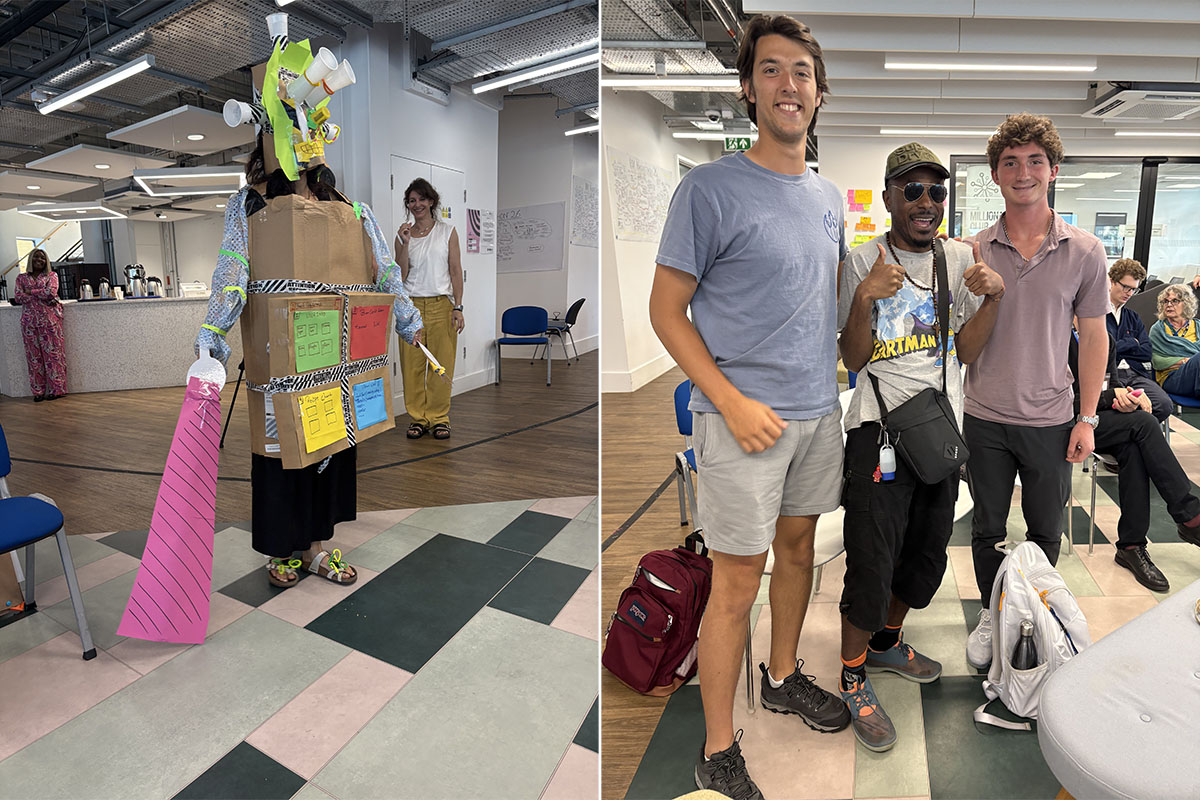
A mighty project featuring a full-size scanner that supports people to have a better understanding of their health. As users move through the scanner, they receive personalised tips and suggestions to improve their wellbeing. We think every home should have one!
TfLGo+
This group focused on the existing TfL app and proposed a series of thoughtful, incremental improvements that would significantly improve accessibility for disabled users. Their project demonstrated how small design changes can make a huge difference to many people.
Now in its third year, the Inclusive Hackathon continues to deliver something very special: different people working together to solve real-world challenges. Every year it grows, bringing together new people with new perspectives from across the UK and around the world, making it one of the highlights of my year. The event celebrates inclusion, creativity and engineering, but at its heart is a belief in the power of lived experience. When we place lived experience at the centre and design to the edges, we create solutions that improve everyday life for everyone. We are already planning for Hackathon27!
Craig Wilkie, RIX Technical Director
We also used the RIX Hackathon event to launch the new book by UEL Research Fellow and RIX Technical Director Craig Wilkie, How to Run an Inclusive Hackathon – An accessible guide to co-producing new ideas with diverse groups.
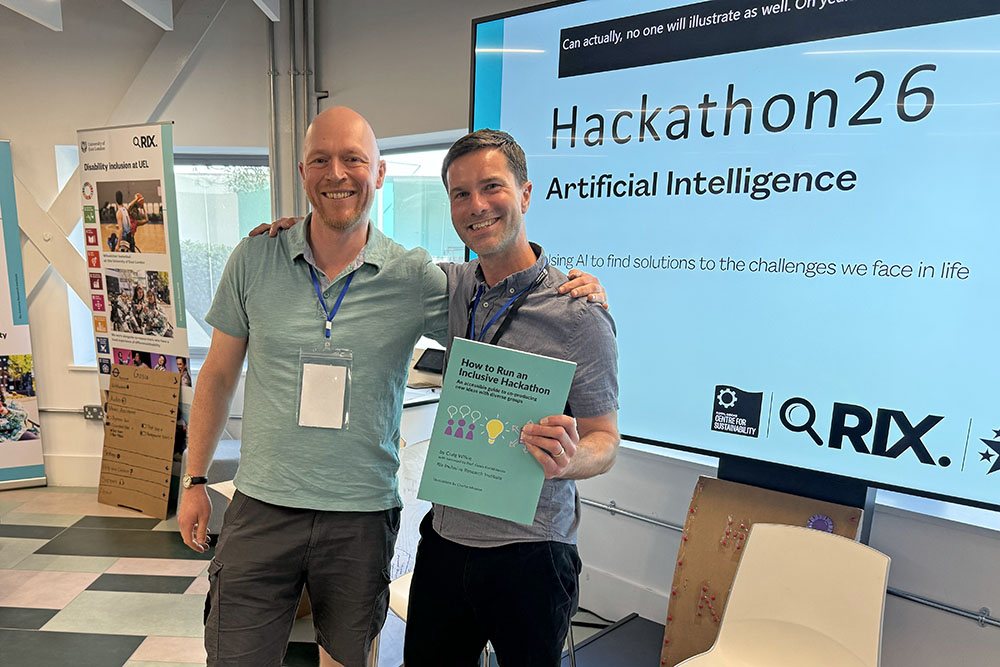
Craig’s book is an invaluable resource for groups and organisations who understand the value of working inclusively but are not sure where to start. We have limited copies of the book – please email Kanchan at rixadmin@uel.ac.uk to find out more.