Locked Out by Design: Financial Systems and the People They Were Never Built For
As the UK continues to move towards a more digital and cashless society, it is vital that financial systems work for everyone. Yet many disabled people continue to face barriers when accessing and using financial services, from digital platforms and identity verification processes to customer support and everyday banking.
At RIX, we believe that people with lived experience should be at the heart of designing the services, technologies, and policies that affect their lives. Inclusive innovation happens when diverse voices are listened to, valued, and meaningfully involved in shaping solutions.
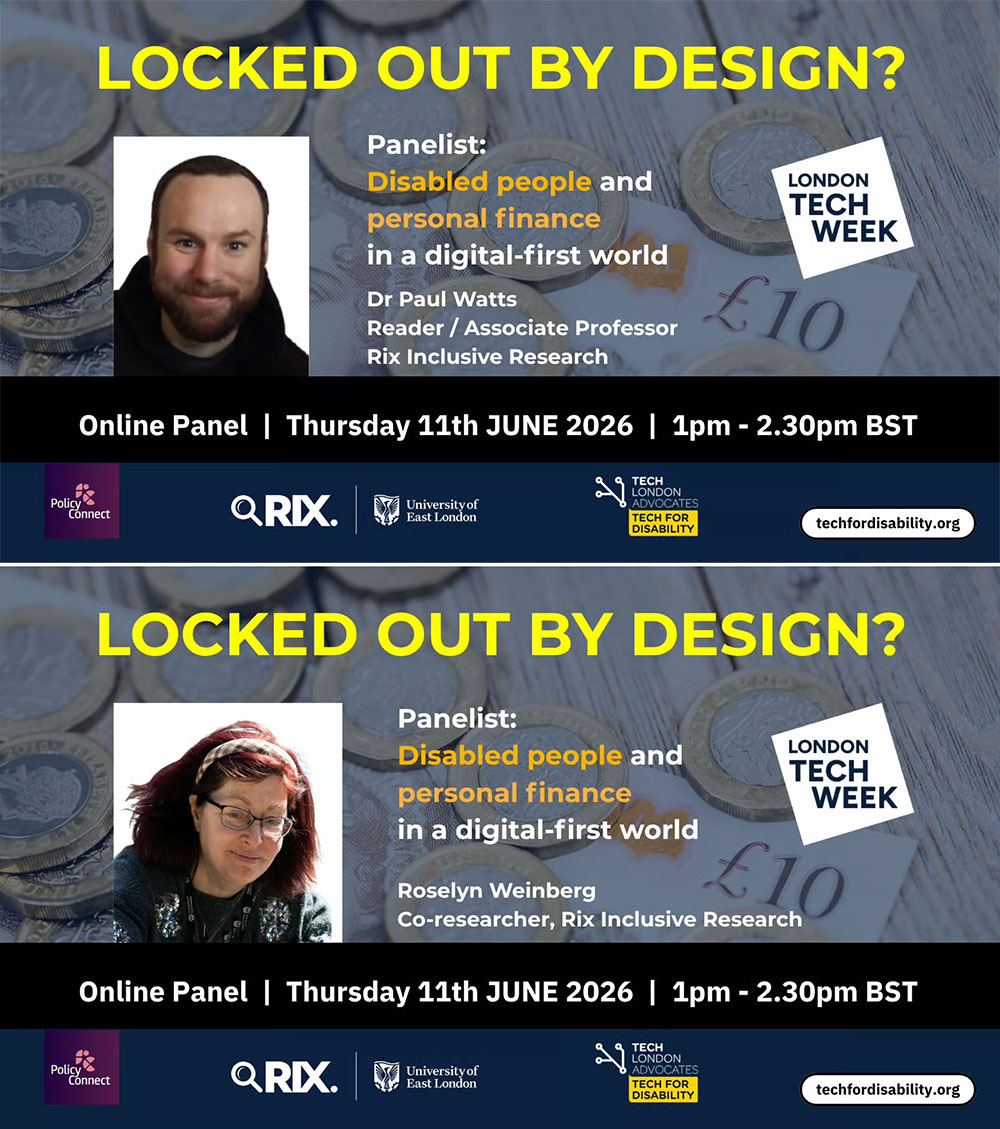
We are delighted that members of the RIX team will be contributing to this important discussion:
Paul Watts, Reader and Associate Professor at the University of East London, whose work focuses on inclusive research, participation, and social justice
Ros Weinberg, who will bring the invaluable perspective of lived experience, helping to highlight the real-world impact that inaccessible systems can have on people’s everyday lives
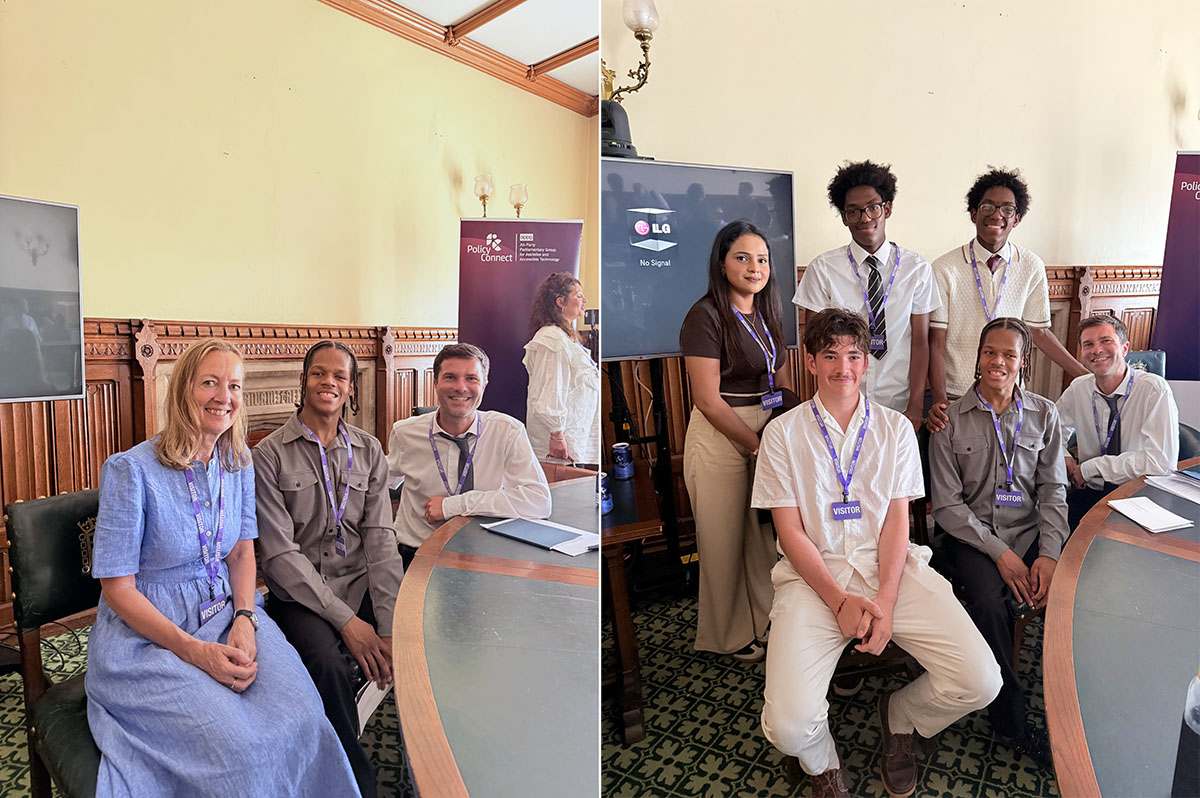
Paul Watts and Ros Weinberg will be representing RIX on the online panel
Together with experts from technology, policy, research, and disability communities, the event will explore:
How financial systems can unintentionally exclude disabled people
Why lived experience is essential to designing accessible services
What more inclusive financial systems could look like
How technology, policy, and co-production can help drive meaningful change
This year we celebrated Global Accessibility Awareness Day (GAAD) on 21 May, an important international event that encourages people to think, talk, and learn about digital accessibility and inclusion.
Celebrated annually on the third Thursday in May, GAAD brings together organisations, educators, researchers, technology developers, and communities to raise awareness about the barriers disabled people can face when using digital technologies and online spaces.
At Rix Inclusive Research, accessibility is central to everything we do. We believe that digital technologies should empower people, strengthen communication, support participation, and create opportunities rather than barriers. Global Accessibility Awareness Day gives us an opportunity to reflect on the progress that has been made, while also recognising how much more still needs to be done to ensure everyone can fully participate in digital life.
Today, technology shapes almost every aspect of our lives. We use digital systems to learn, work, communicate, access healthcare, shop, travel, and connect with others. However, many websites, apps, online forms, videos, and digital services are still not designed inclusively. For many disabled people, this can create frustration, exclusion, and inequality.
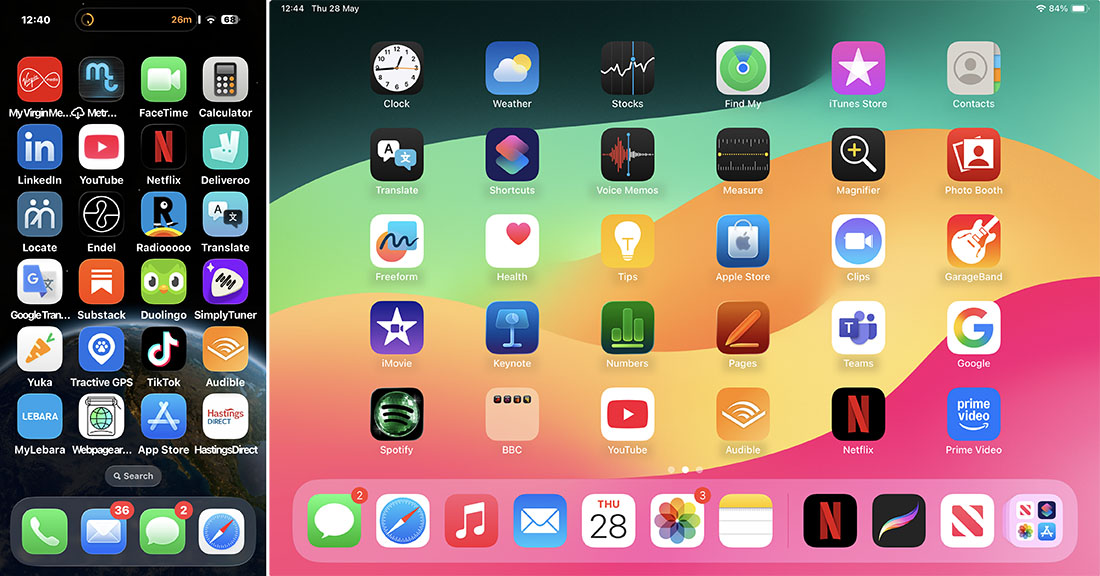
Array of apps on digital devices
Accessibility means designing technology, environments, and information so that people with different needs, preferences, and ways of communicating can use them effectively. This includes people with physical disabilities, sensory impairments, learning disabilities, neurodivergence, mental health needs, and people with profound and multiple learning disabilities. Accessibility is not only about compliance or technical standards; it is about dignity, participation, independence, and human rights.
Importantly, accessible design benefits everyone. Features such as captions on videos, clear navigation, plain language, readable fonts, voice control, keyboard navigation, and alternative text for images make digital content easier for many people to use. Accessibility supports people using mobile devices, older adults, people with temporary injuries, individuals with low digital confidence, and those using technology in challenging environments. Inclusive design improves experiences for all users.
As part of the University of East London, RIX works closely with colleagues across the university to promote inclusive and accessible approaches to teaching, learning, communication, and digital practice. UEL has developed a Digital Accessibility Toolkit that provides practical guidance and resources to help staff and students create more accessible digital content and learning environments. Initiatives such as these reflect a shared commitment to embedding accessibility into everyday practice across education and research.
Everyone at RIX is committed to digital inclusion
RIX has also been proud to contribute to wider national and international accessibility initiatives through collaborative partnerships. One example is the Accessible Academy project, led by Nottingham Trent University, which focuses on improving equity, accessibility, and inclusion in education through practical resources, training, and toolkits for educators and organisations. The platform provides guidance on inclusive teaching, accessibility, and the use of technologies, including generative AI, to reduce barriers in learning environments. Projects such as Accessible Academy demonstrate the importance of universities working together to share knowledge, develop inclusive practices, and create sustainable approaches that support diverse learners across educational settings.
At RIX, our work has long focused on creating inclusive and accessible approaches that support people with disabilities to communicate, participate, and have their voices heard. Through projects involving multimedia advocacy, inclusive research, digital storytelling, co-production, and person-centred technologies, we work directly alongside people with lived experience to develop meaningful and accessible solutions.
One of the key principles of our work is that accessibility cannot be designed for people without involving them. People with lived experience must be included as co-creators, co-researchers, designers, and decision-makers. Too often, systems and technologies are created without meaningful consultation, resulting in barriers that could have been avoided. Co-production and inclusive practice are therefore essential to creating truly accessible futures.
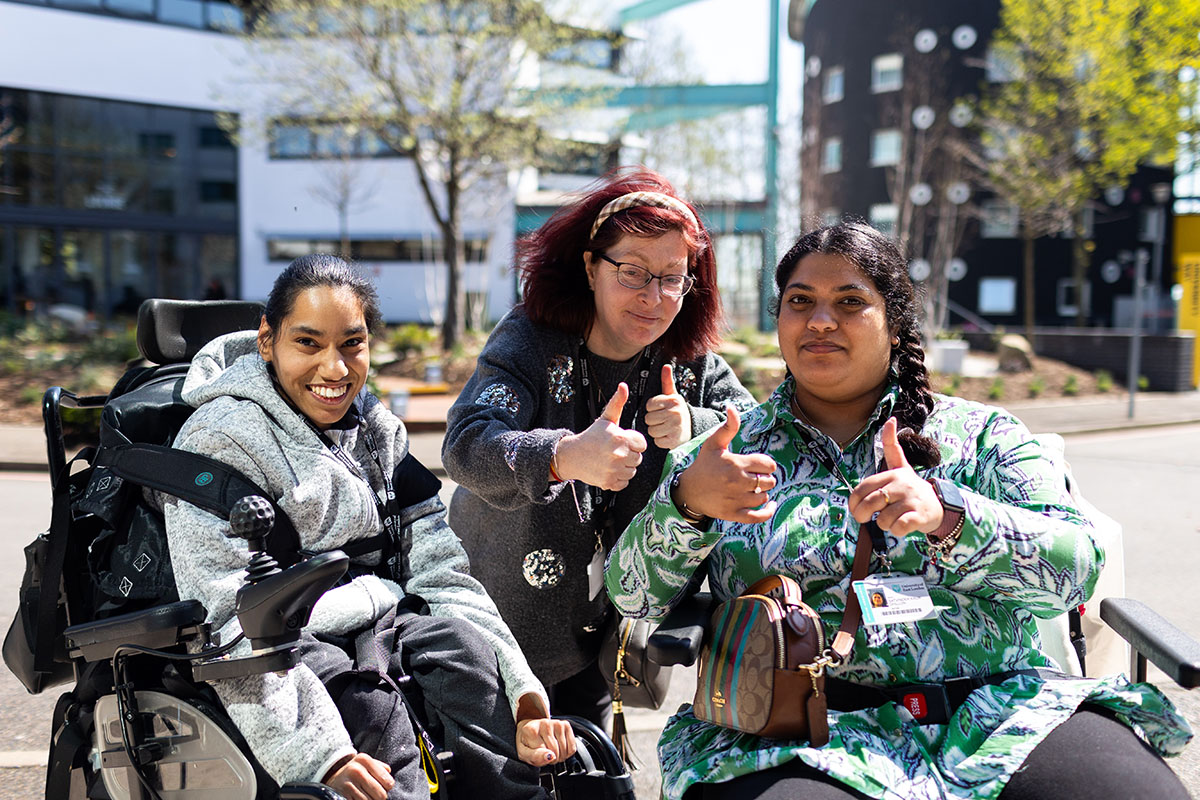
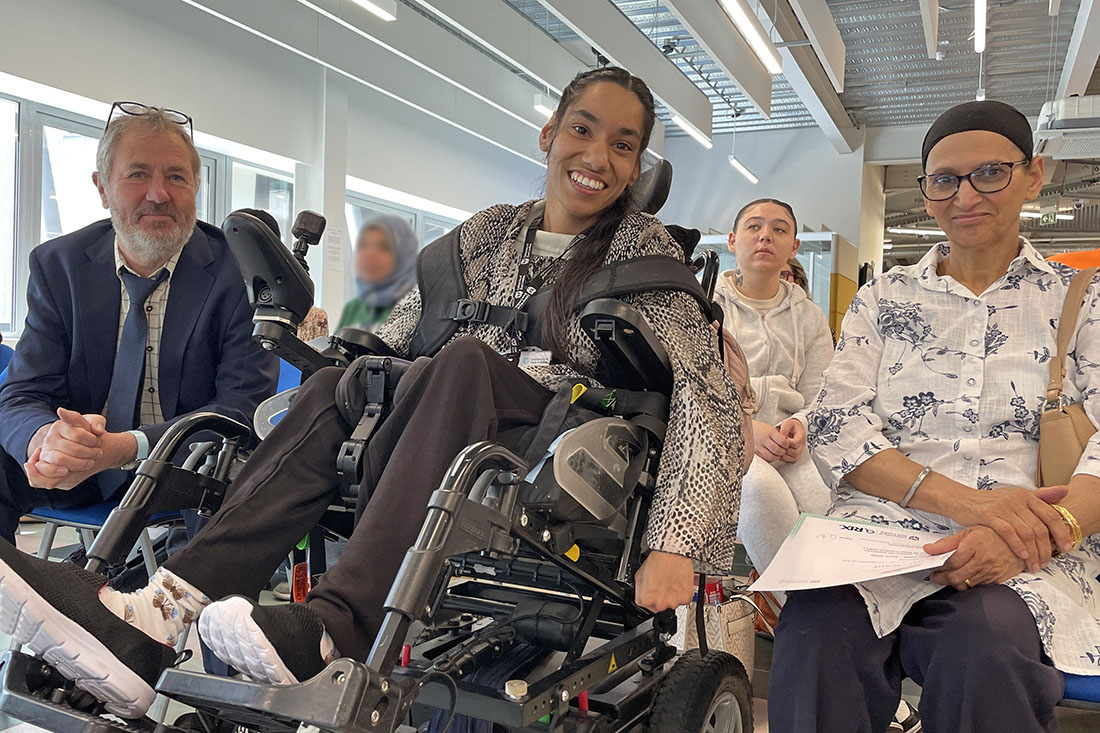
RIX co-researchers Baljit, Ros and Kiran at UEL’s Docklands campus
We have seen how technology can support self-advocacy, improve communication, strengthen confidence, and create opportunities for participation in education, employment, research, and community life.
At the same time, we recognise that digital exclusion remains a significant issue. Many disabled people still face barriers related to:
affordability
digital skills
inaccessible systems
lack of support
or assumptions made about their abilities
Addressing digital exclusion requires more than simply providing devices. It requires ongoing support, accessible design, inclusive training, and a commitment to listening to people’s experiences.
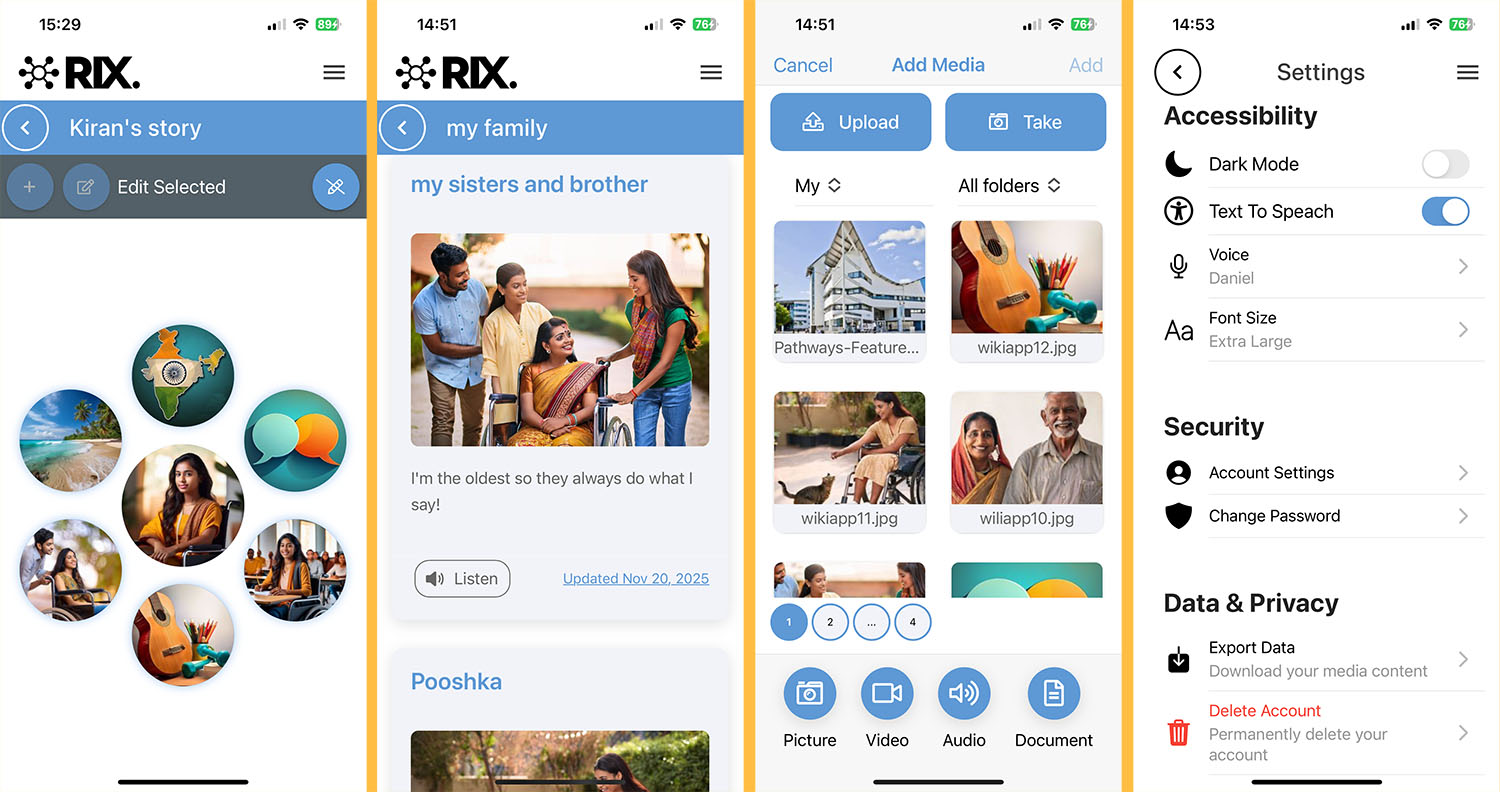
Screenshots of the RixWiki app on iPhone
Global Accessibility Awareness Day is also a reminder that accessibility is everyone’s responsibility. Small changes can make a significant difference. Writing in plain English, captioning videos, checking colour contrast, creating screen-reader-friendly documents, providing image descriptions, and ensuring websites are easy to navigate are all practical steps that help make digital spaces more inclusive.
For organisations, accessibility should not be viewed as a one-off task or checklist. It should be part of organisational culture, values, and everyday practice. Inclusive communication and accessible design need to be embedded across teaching, research, services, and technology development.
At Rix Inclusive Research, we remain committed to promoting accessibility, inclusion, and participation in all aspects of our work. We will continue working alongside people with disabilities, families, communities, and organisations to challenge barriers and develop creative, person centred, and inclusive approaches that value everyone’s voice.
Global Accessibility Awareness Day reminds us that accessibility is not simply about technology — it is about people, equality, and creating a world where everyone can participate fully and meaningfully.
Госия Квятковска, директор RIX
Storysharing® is a unique programme that supports people with severe communication disabilities to remember and share small stories of events in their daily lives.
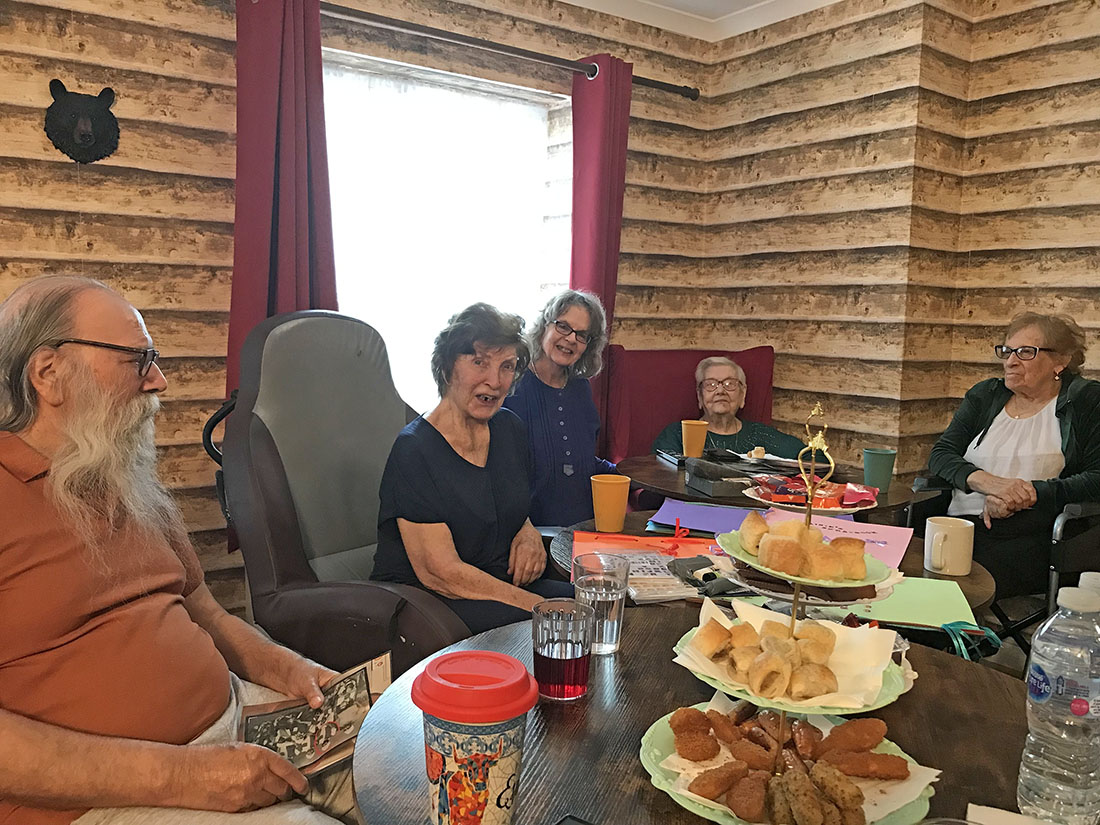
In 2025, this was one of two projects selected for an Impact Launchpad pilot in care homes in East London, jointly funded by London Social Ventures и Care City. This was an exciting opportunity to try the programme out in the new setting of elder care, including individuals with dementia – as well as the more familiar setting of a learning disability day care service. I had great support from the LSV/CC team.
Storysharing tea party at care home
What were the outcomes?
The Impact Launchpad pilot tested Storysharing across three care settings between November 2025 and March 2026. The findings were clear: Storysharing creates real value for residents, staff and the wider atmosphere of care settings. It helped residents express identity and preferences, strengthened relationships between residents and staff, and gave staff richer ways to understand the people they care for.
One resident said “we’ve got to hear each other’s stories; it’s been an eye opener”. These residents went on to share their stories outside the sessions with others, creating an enthusiasm for exchanging anecdotes.
For those with dementia, it was evident that small stories from family history had the potential to evoke well established memories, particularly when associated with catchphrases. Family members spoke of how telling these stories animated their relatives and brought them out of themselves.
We also saw how great people were at supporting those who communicated nonverbally – one young woman at the day centre was particularly good at this, especially using a Big Mac communication aid.
What’s happening next?
We are delighted to say that RIX is partnering with City Care to develop proposals for taking Storysharing® forward:
Developing a model of readiness that identifies what stage homes are at in their development of a culture of shared conversational stories, and what support they need to go further
A toolkit of resources ready made for homes to use immediately
A new level of Storysharing® light training that sits between our current Foundation level (information) and Licensed Practitioner level (in-depth knowledge and experience)
An app to support the gathering, recording and sharing of small stories for families, carers and associated professionals
Watch this space for updates on this partnership.
We are grateful to participants, staff and families who helped us in the pilot study, and to LSV and City Care for the opportunity they provided. Special thanks to Anjali Moorthy for her support.
Nicola Grove, Professor for Profound & Multiple Disabilities
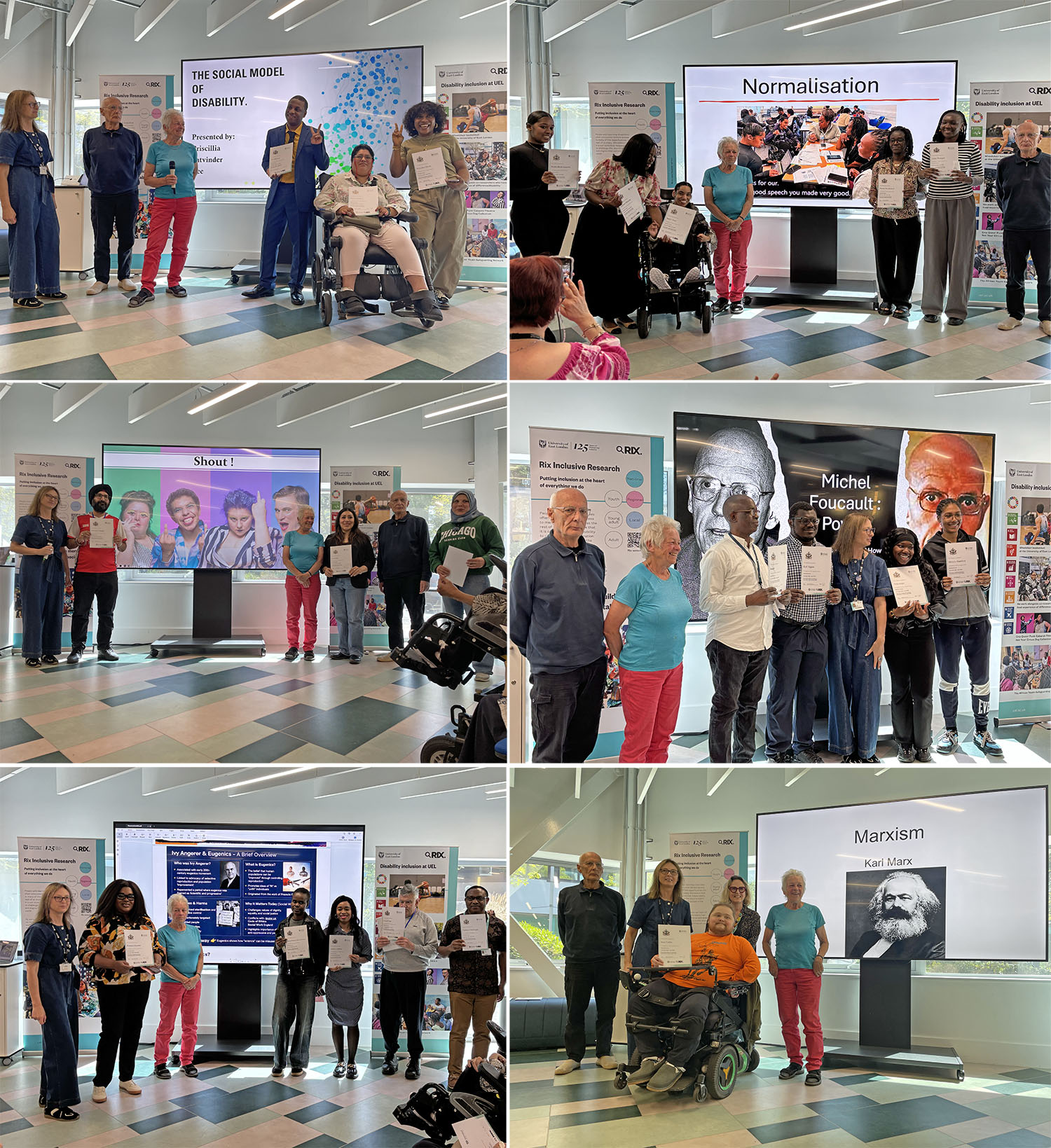
Social work students and people with learning disabilities came together on Monday to celebrate the completion of the RIX Big Ideas course, marking the occasion with an inclusive and inspiring graduation event.
Held at the University of East London, the event brought together graduates alongside family members, friends, and supporters. The atmosphere was warm, reflective, and celebratory capturing the essence of a course that is built on partnership, shared learning, and mutual respect.
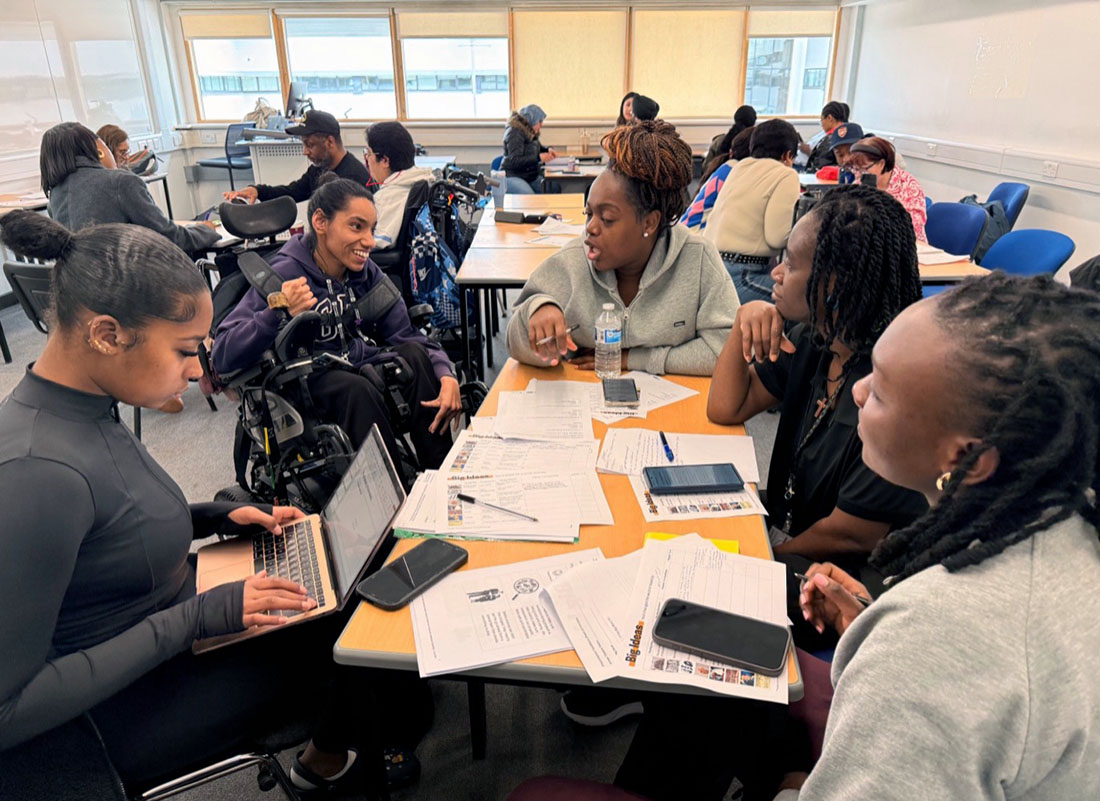
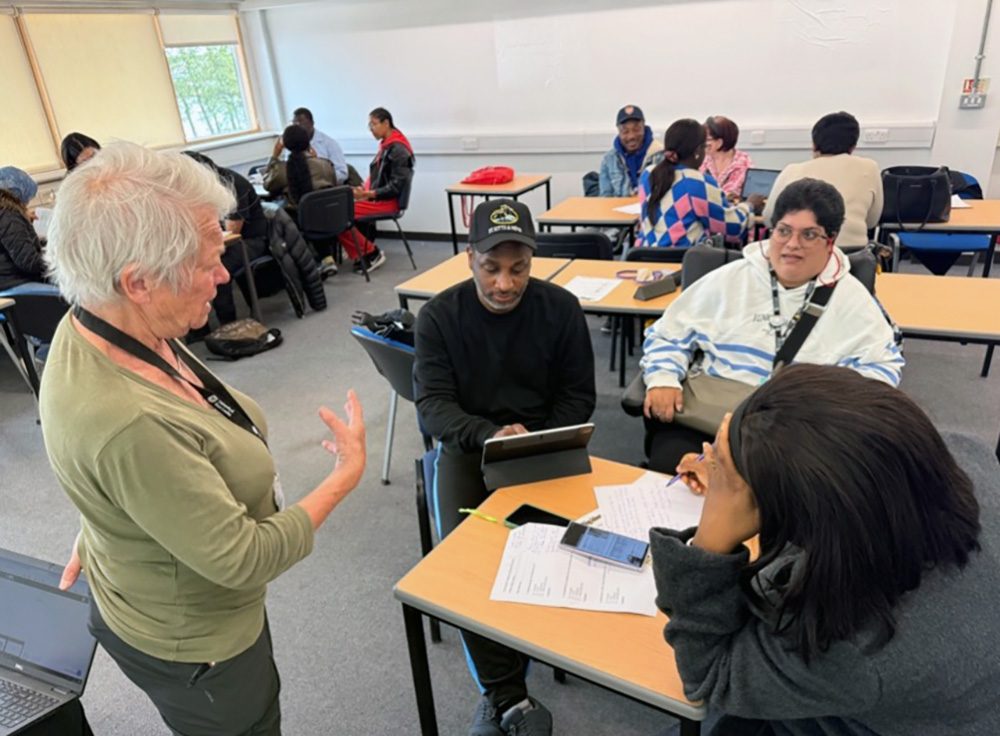
Big Ideas students with learning partners
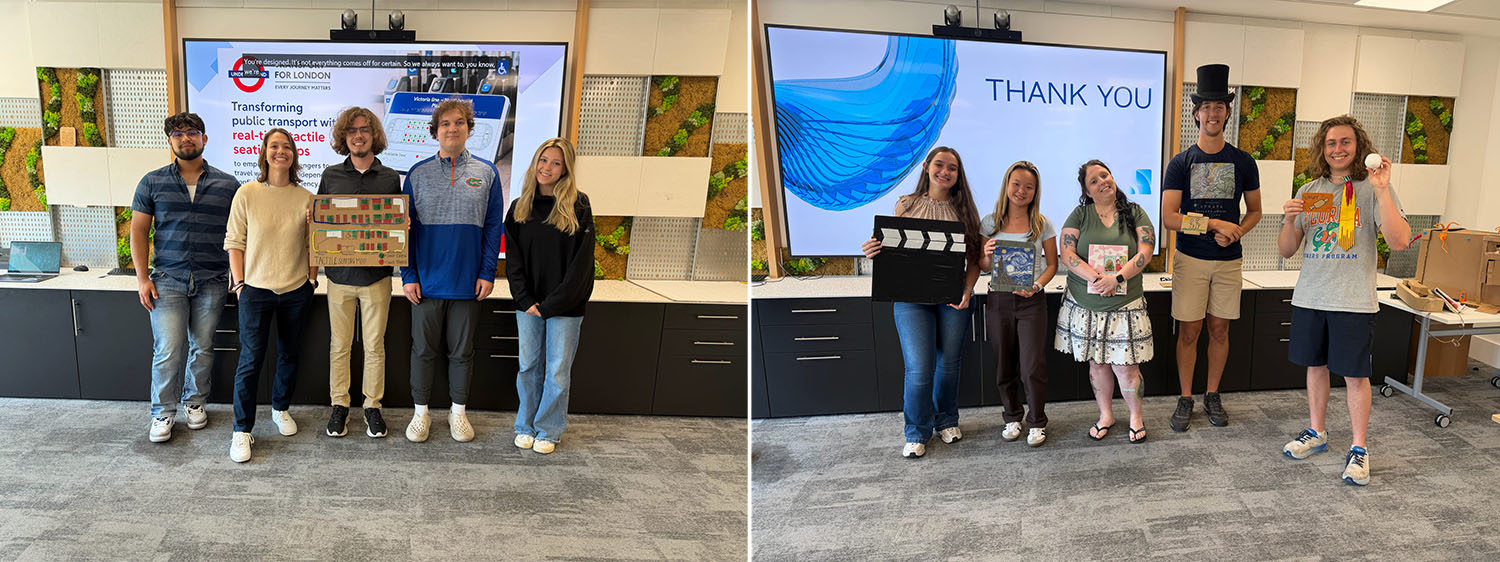
A central feature of the event was the opportunity for participants to present their learning. Working in mixed groups, students and people with learning disabilities shared some of the key ideas that had stood out to them throughout the course. These presentations were diverse in style and approach, reflecting the inclusive ethos of the programme. Some groups chose to focus on discussion and dialogue, while others used storytelling, visuals, and creative methods to communicate their thinking.
Rather than simply recalling information, participants demonstrated how they had engaged with complex ideas and connected them to real-life experiences. The presentations highlighted not only what had been learned, but how it had been understood, interpreted, and made meaningful by each group.
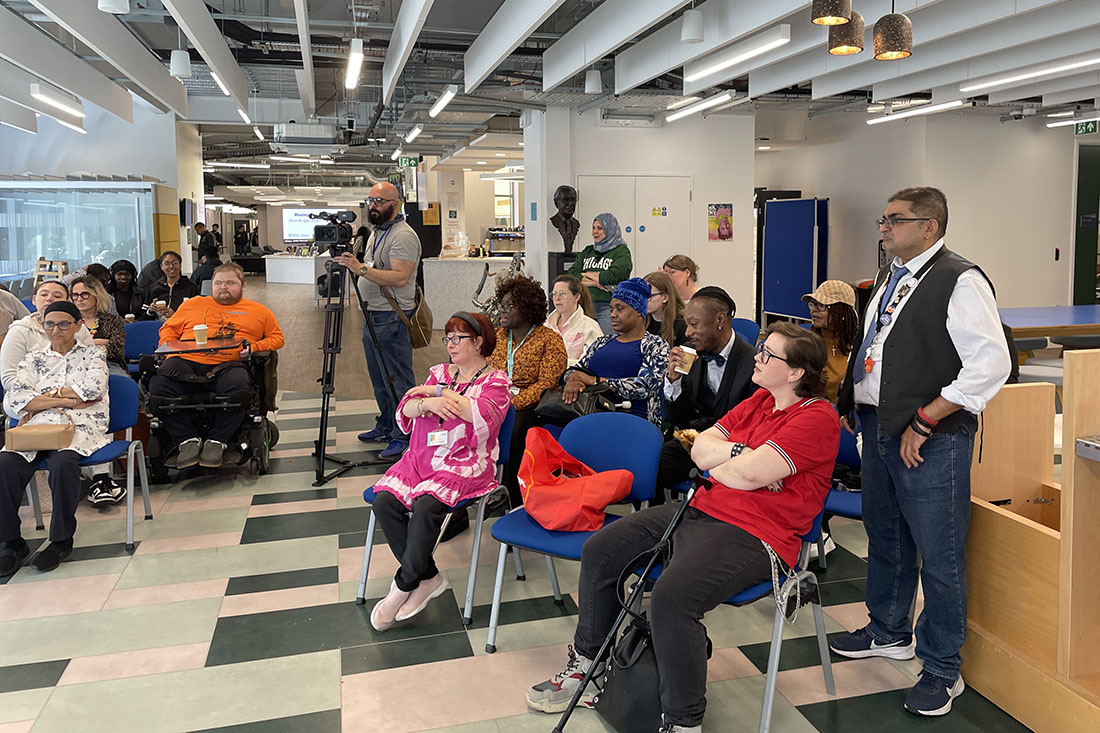
A captive audience of learners
The Big Ideas course is designed to challenge traditional models of teaching and learning. It brings together social work students and people with learning disabilities in a shared space where everyone contributes equally. Participants explore major social, philosophical, and ethical ideas, but always in ways that are accessible, relevant, and grounded in lived experience.
This approach was clearly visible during the graduation event. There was a strong sense that learning had been co-produced, rather than delivered. Students spoke about gaining new perspectives, while people with learning disabilities shared their insights and interpretations with confidence and clarity. The boundaries between teacher и learner became less defined, replaced by a more collaborative and respectful way of working together.
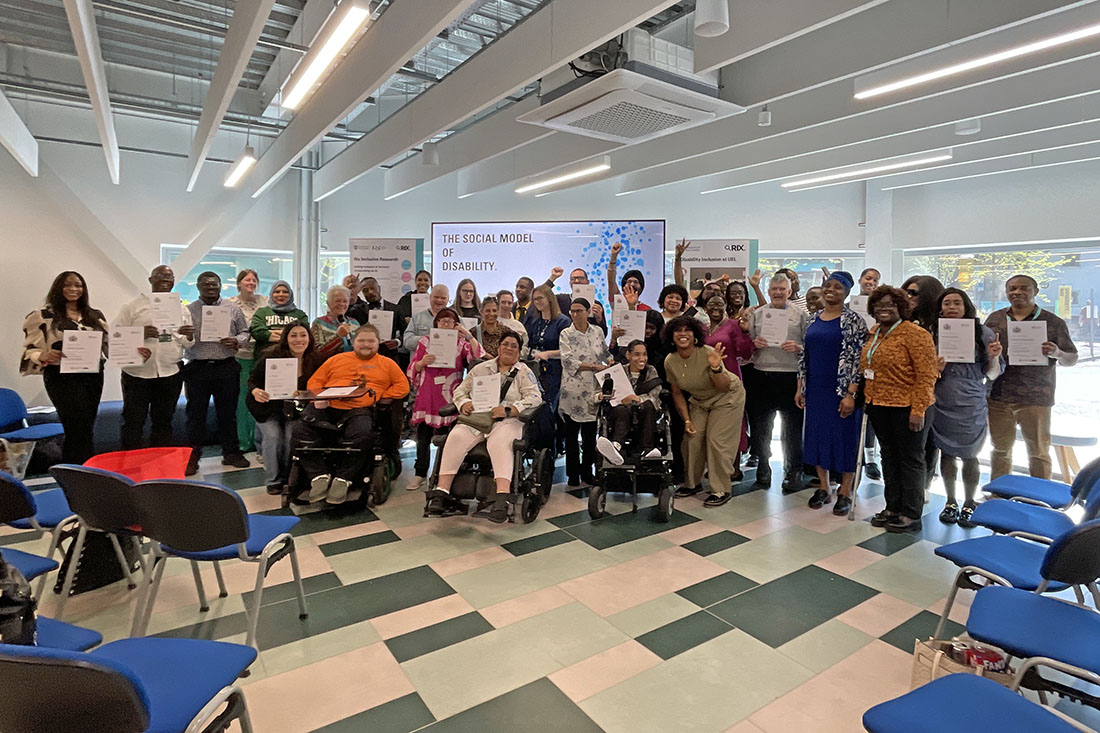
Some of the Big Ideas graduates – there were 29 in total
For many attendees, the event was also an important moment of recognition. Family members and supporters had the opportunity to see the work that participants had been involved in and to celebrate their achievements. The pride in the room was evident not only in completing the course, but in the personal growth, confidence, and relationships that had developed along the way.
The graduation also highlighted the broader impact of inclusive education. By creating spaces where people with learning disabilities are actively involved in exploring and shaping knowledge, programmes like Big Ideas contribute to a shift in how learning is understood and delivered. They demonstrate that complex ideas are not the preserve of traditional academic spaces, but can and should be accessible to everyone.
At the Big Ideas graduation in the Royal Docks Centre for Sustainability
Importantly, the course supports the development of skills that go beyond the classroom. Participants build confidence in expressing their views, engaging in discussion, and working collaboratively with others. For social work students in particular, this experience provides valuable insight into person-centred and inclusive practice principles that are central to their future professional roles.
The event marked both an ending and a beginning. While it celebrated the completion of the course, it also reinforced the importance of continuing these conversations and approaches in wider educational and professional contexts.
The Big Ideas course is part of RIX’s ongoing commitment to inclusive research and teaching, ensuring that people with learning disabilities are not only included in education, but are active contributors to it.
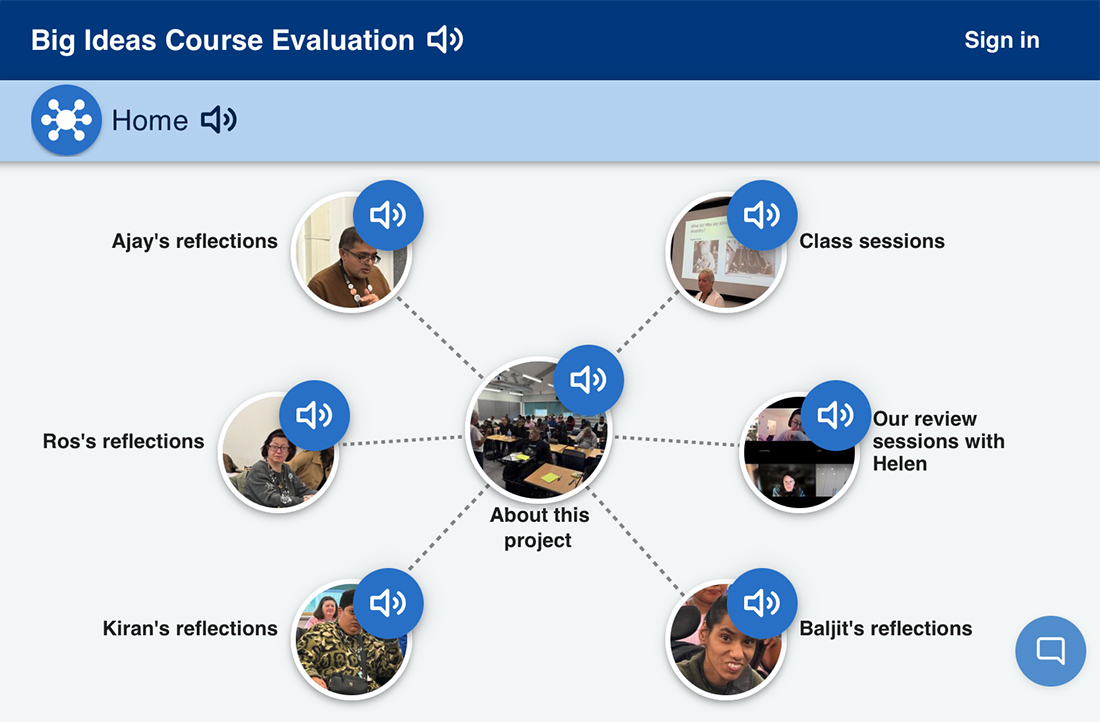
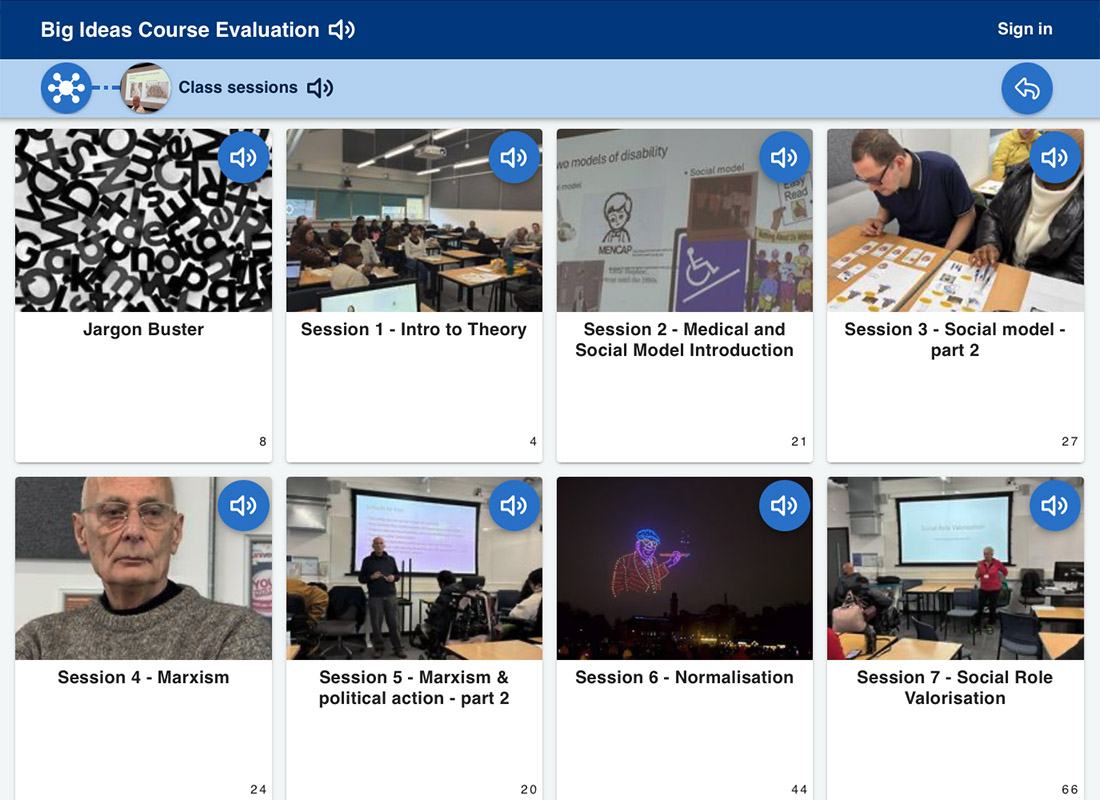
For those interested in learning more about the course and its innovative approach, further details can be found in the article below.
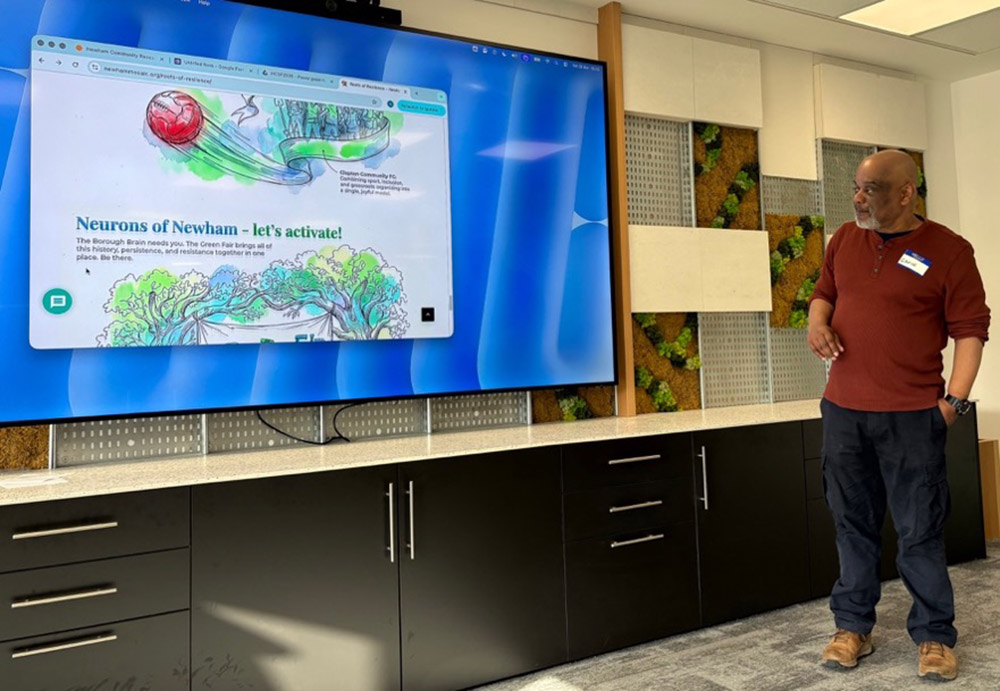
Сайт Newham Citizen Science Fair (NCSF) 2026 was a busy, friendly and dynamic community event where people of all ages and abilities came together to learn, explore new ideas and participate in hands-on activities.
Now in its third year, this was the first time the NCSF was hosted at the Royal Docks Centre for Sustainability (RDCS), adding an exciting new dimension to the fair.
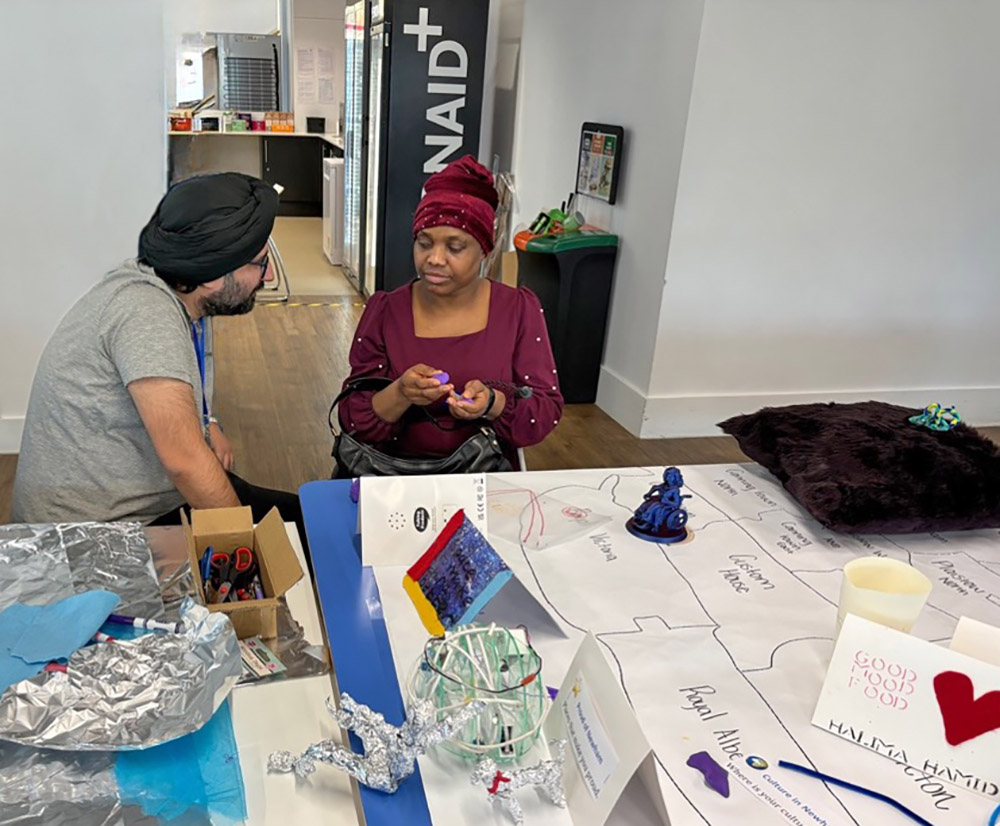
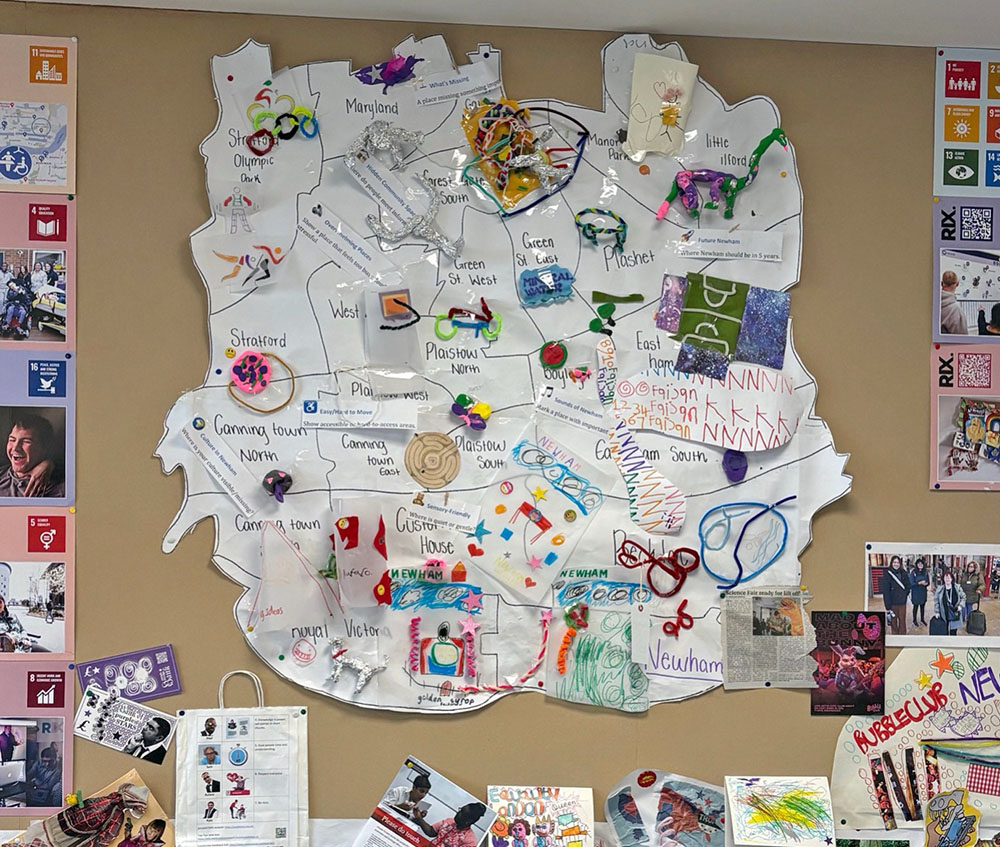
Members of purpleSTARS, RIX co-researchers and social work students hosted an exhibit inviting visitors to share their lived experiences by contributing to a multi-sensory collage map of Newham. Through creative sensory artworks and personal reflections, the exhibit brought together diverse perspectives and highlighted the real-life challenges, strengths and stories of Newham’s communities.
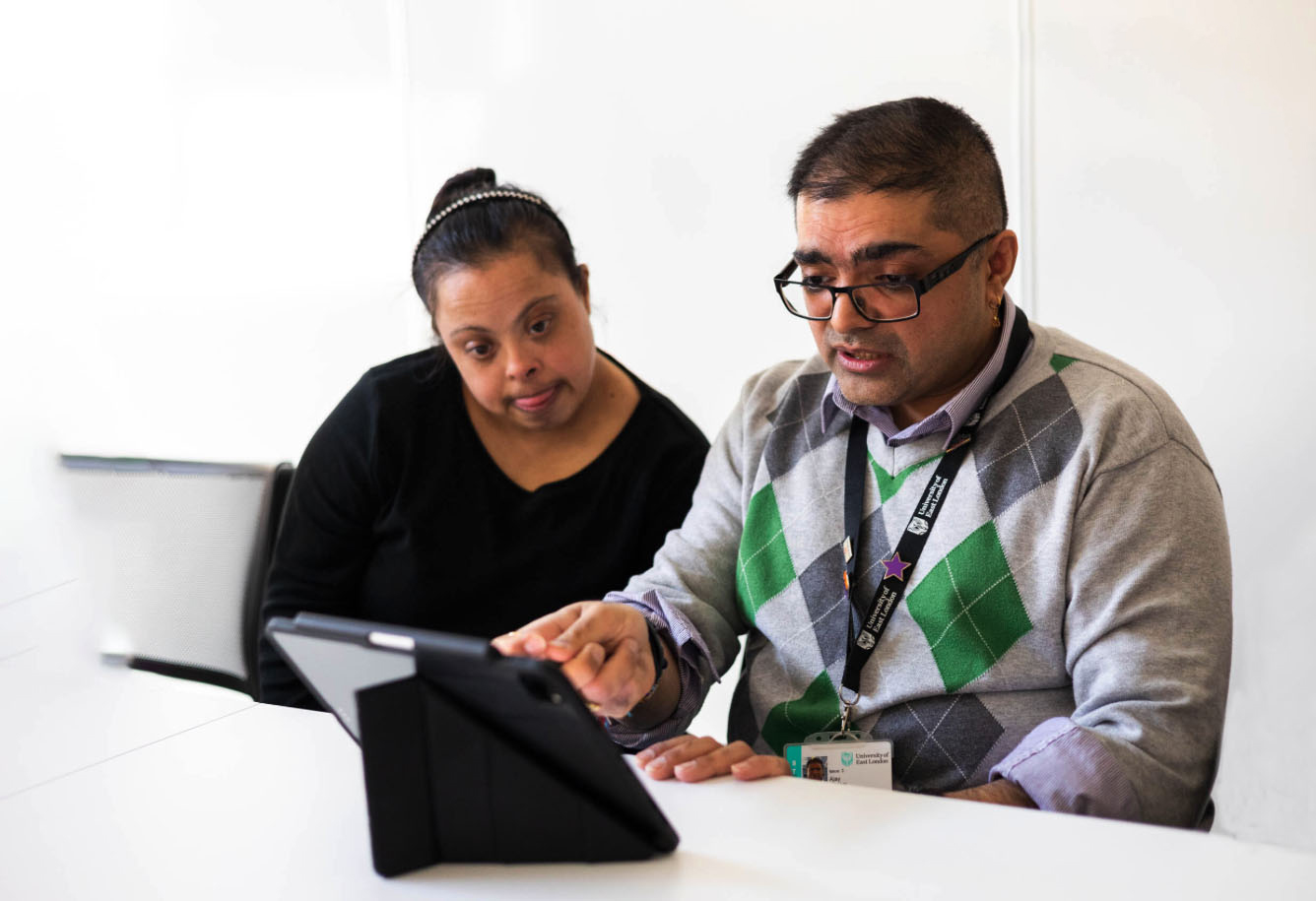
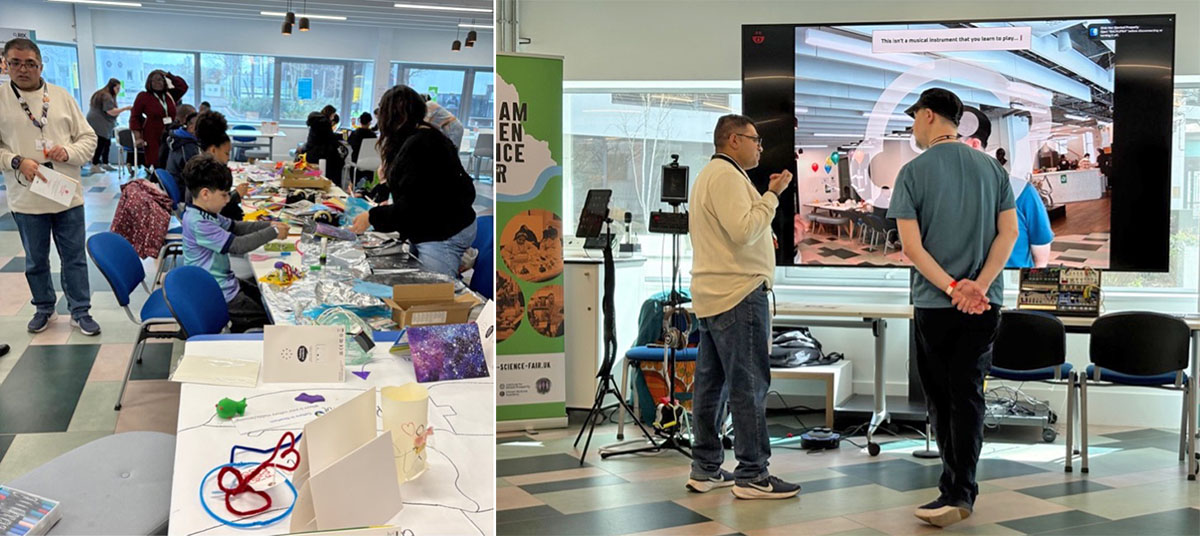
Ajay at the event and checking out PhotoSYNTH with Zen
Lots to see and do
There were many different stalls and activities. People explored new technology, science projects and fun hands-on demonstrations. Ajay said:
I enjoyed the Newham Citizen Science Fair. It was very exciting. I saw different sections like Smile Powered Music with the PhotoSYNTH, the Newham Community Research Network and the UCL Citizen Science Academy. I also liked the Newham mind-mapping—it reminded me of growing up in old school, secondary school and sixth form. It was a very busy day and a lot of fun!
A fun and inclusive community event
Visitors said the event felt welcoming for everyone. Mary-Ann said:
It was a lovely, fun and engaging community event with lots to do for different ages and abilities. It was thought-provoking and there was lots to learn in a fun and interactive way.
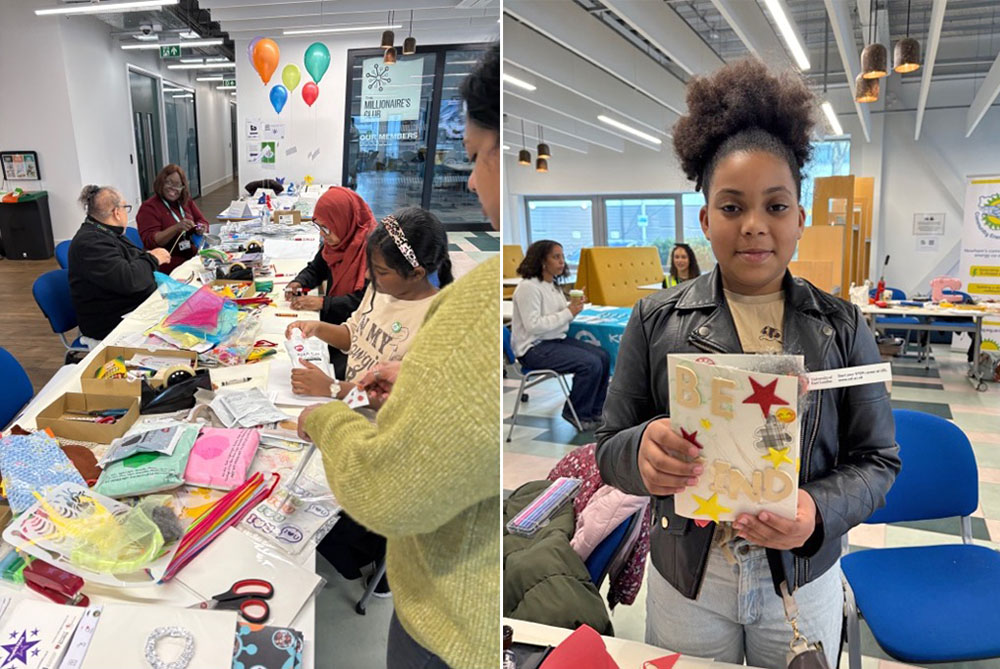
Samantha and Renee-Deborah with visitors and tactile sound ‘Be Kind’ card created by visitor to the fair
Inspiring technology for accessibility
Many people were impressed by how technology is being designed to support people with learning and physical disabilities. Tofunmi said:
The fair was eye-opening and inspiring. I saw amazing projects showing how technology can be customised for people with disabilities. It reminded me how important it is to make new technology accessible for everyone. I loved seeing researchers, developers and community members working together. It deepened my understanding of what accessible technology can do, and why inclusive voices matter.
Gavin Sealy highlighted the need for us to approach Artificial Intelligence, AI, as a conversational tool that will strengthen our ability to think clearly as individuals and to think well together as communities. He argued AI is not about replacing people with machines but about highlighting the value of people in the age of the machine.
Gavin Sealy’s presentation
Working together and sharing ideas
The fair created opportunities for collaboration, conversation and co-production. Nic said:
It was a positive experience participating in the Newham Citizen Science Fair. I met a wide range of people and explored many different projects. The event felt open and collaborative, with informal conversations and hands-on activities helping people learn together. I especially enjoyed projects like the LEGO Mindstorms (which I spent ages playing with!) and the musical instruments created by Zen. These showed the creativity and technical skill in the community and highlighted how citizen-led innovation can bring people together.
Building skills and confidence
The fair was also a great place for students and young people to practise communication skills. Ifeoma said:
The fair was informative and insightful. I got to put my signing skills into practice while talking with others. It helped build my confidence in communication. It was a positive opportunity to participate and contribute. I enjoyed seeing local residents sharing high-quality research that supports our borough. I used my Makaton skills when talking with children who are D/Deaf or hard of hearing. It was a rewarding day that showed the power of inclusive community research.
Ifeoma with purpleSTARS member Jas
A successful day for Newham
The Newham Citizen Science Fair 2026 showed how powerful community-led research can be.
People shared ideas, learned from each other and explored new ways to make Newham a fairer and more inclusive place.
Inclusive creative sensory mind map of Newham co-created by visitors to the Newham Citizen Science Fair – now on display in the RIX office
Rix Inclusive Research at UEL is proud to support events like this, where everyone’s voice matters and everyone can take part.
Are you passionate about community engagement, inclusion and research with young people with Special Educational Needs and Disabilities (SEND)?
We’re looking for a Young People with SEND NCRN Coordinator to set up and lead an inspiring Community Research Network. This network will support young people to become paid citizen social scientists. These young people will shape research on the issues that matter to them.
This is a great opportunity to combine youth work, inclusive research, and social impact and will help communities who are often left out influence change.
This job is based at The 5Es и The RIX Centre.
Find out more about this great opportunity by checking out the easy read overview and Job Description below.
At RIX, our work is rooted in collaboration, co-production, and learning across borders. Recent international activities across Egypt, Saudi Arabia, and Uzbekistan have provided powerful opportunities to share our approach to inclusive research and practice, while also learning from colleagues, students, and leaders who are equally committed to creating more accessible and inclusive societies. These experiences remind us that inclusion is a global conversation — and one that grows stronger through shared experiences, partnerships, and mutual learning.
Egypt: Inclusion, Learning and Cultural Exchange
Our visit to Egypt centred around participation in an international summit and the Tamkin 2026 programme, both focused on advancing inclusive education and opportunities for students with disabilities.
Two students travelled with me as part of the RIX delegation. Their presence was essential. Inclusion is not something we talk about for students — it is something we build with them.
International Summit: Conversations on Inclusive Universities
At the summit, I presented to an audience that included the Minister of Higher Education, university leaders, professors, and practitioners. The focus of our contribution was clear: how we can work together to make universities more inclusive, accessible, and responsive to diverse learners.
International Summit delegates in Egypt
We shared RIX approaches to:
Co-production with people with lived experience
Multimedia advocacy and digital inclusion
Universal Design for Learning (UDL)
Creating inclusive learning environments across teaching, research, and student life
The discussion highlighted a shared commitment across countries to move beyond policy statements and into practical implementation — designing systems, spaces, and cultures where all students can participate and flourish.
Student Participation and Global Connections
The two students who travelled with us participated fully in the conference and in the Tamkin 2026 programme. They met students from other universities, exchanged ideas, and experienced international collaboration first-hand.
This experience strengthened their confidence, networks, and sense of belonging within a global community working toward inclusion. It also demonstrated the importance of creating opportunities for students to participate in international spaces as active contributors, not just observers.
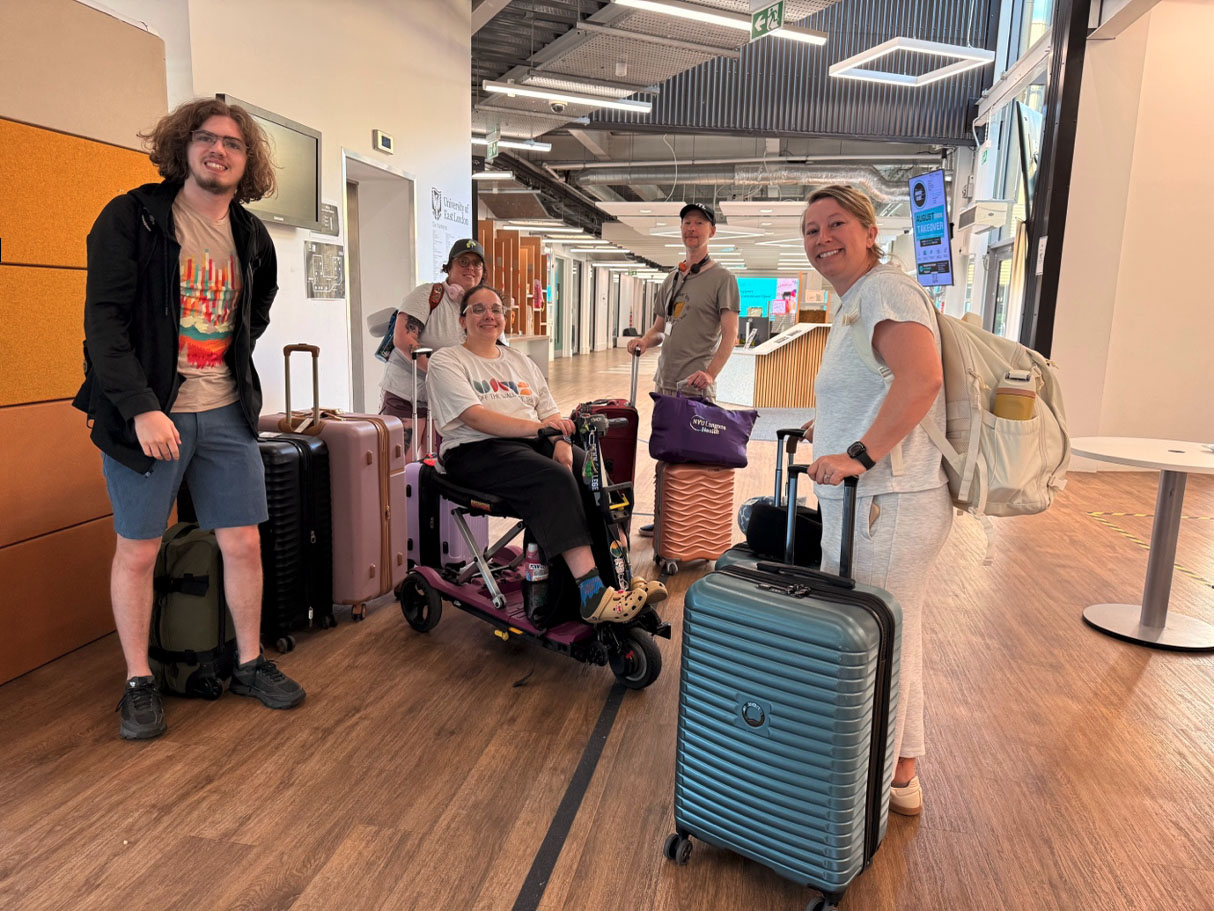
Loving the cat and baking the bread
Experiencing Egypt Together
Alongside the academic programme, we shared cultural experiences that deepened our understanding of Egypt’s history and richness. Together with the students, we visited some of Luxor’s most iconic sites:
The Valley of the Kings
Luxor Temple
A sunrise hot air balloon trip over the Nile and ancient monuments
These shared moments created space for reflection, connection, and joy — reminding us that international collaboration is also about building relationships and shared memories.
In a hot air balloonFlavia and Teddy seeing the sights
Saudi Arabia: Learning Through Dialogue and Experience
The visit to Saudi Arabia offered another valuable opportunity for professional exchange and cultural learning. Meetings and conversations focused on inclusive practice in education and the role of universities in creating accessible environments for all learners.
I also had the opportunity to learn from colleagues and experience local traditions and hospitality. One memorable experience was visiting a traditional restaurant where we sat on the floor and shared food together. This offered a meaningful insight into cultural practices and the importance of respect, openness, and curiosity when building international partnerships.
Gosia out on a missionExamples of signage and accessibility in Saudi Arabia
Uzbekistan: Building Capacity for Inclusive Systems
In the first two weeks of December, we were delighted to host colleagues from Uzbekistan at the RIX Centre as part of our ongoing collaboration with the National Agency for Social Protection and the International Inclusive Hub.
We welcomed leaders from the Hub and lecturers from Tashkent Pedagogical University for an intensive programme of training and exchange. The sessions focused on developing inclusive systems across education and social protection, with particular emphasis on:
Universal Design for Learning and inclusive curriculum design
Digital tools for advocacy and participation, including Rix Wiki
Co-production and working with people with lived experience
Developing inclusive research and leadership capacity
Practical strategies for implementation within universities and national systems
The training created a vibrant space for dialogue, reflection, and shared learning. Colleagues explored how inclusive approaches can be embedded across teaching, student support, and policy frameworks. It was inspiring to work together on practical solutions that can support students with disabilities and create more inclusive educational environments in Uzbekistan.
This partnership continues to grow and forms part of a wider programme of collaboration to strengthen inclusive vocational and higher education systems.
Visit to Google Accessibility Discovery CentreUzbek partners visit in December 2025
Looking Ahead: Continuing the Work Together
Looking ahead, we are now preparing for a two-week visit to Uzbekistan, where we will deliver an intensive programme of training for teachers, academics, and leaders from universities, further education colleges, and vocational education institutions.
The focus of this next phase will be on supporting inclusive teaching and learning across vocational qualifications and higher education. Together with our partners, we will explore practical strategies to ensure that students with disabilities can access, participate in, and succeed within vocational and academic pathways.
Alongside the training programme, we are also working collaboratively with the National Agency for Social Protection and university partners on the development of a white paper and policy recommendations for the Government of Uzbekistan. This work aims to support long-term systemic change by embedding inclusive principles within national policy, educational frameworks, and institutional practice.
Our work is grounded in partnership and mutual learning. We are not simply delivering training; we are working together — sharing knowledge, listening, testing ideas, and co-creating solutions that are meaningful within local contexts. Through this collaboration, we hope to contribute to sustainable, inclusive systems that support all learners to thrive.
Workshop at Google Accessibility Discovery Centre
Reflections: Building Inclusive Universities Together
Across Egypt, Saudi Arabia, and Uzbekistan, several shared themes have emerged:
Inclusion is a global priority requiring collaboration and leadership
Students and people with lived experience must be central partners
Cultural exchange strengthens professional relationships
Practical tools and approaches are essential to turn vision into reality
Ensuring all students have access to education
We are proud to represent RIX internationally and to contribute to global conversations about inclusion, accessibility, and participation. Just as importantly, we return inspired by the commitment and innovation of our partners and colleagues around the world.
These collaborations remind us that meaningful change happens when we work together — across institutions, countries, and cultures — to create learning environments where everyone can belong and succeed.
Гося Квятковска
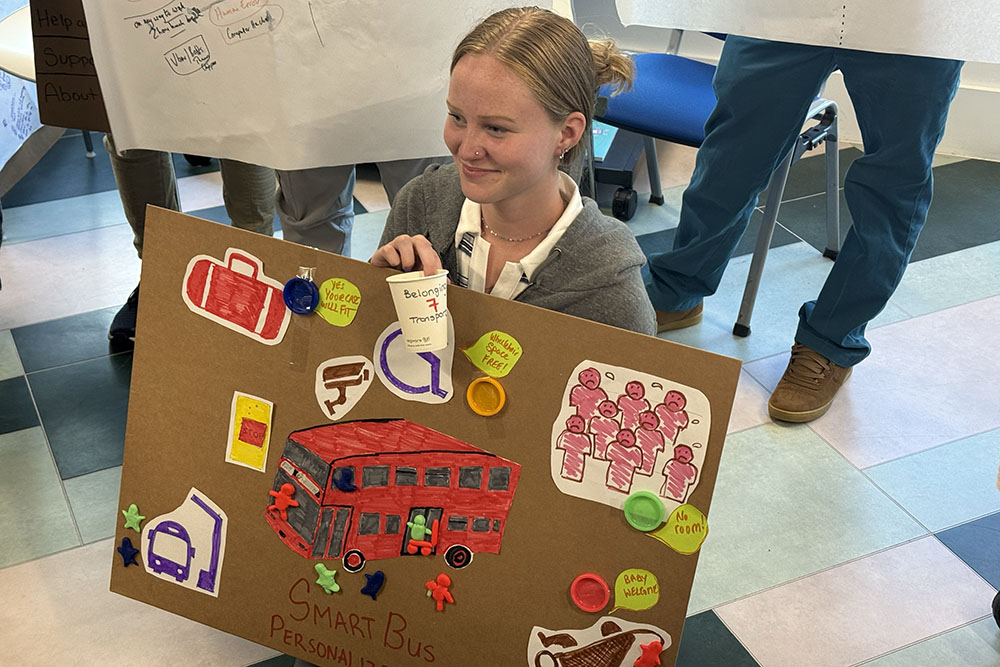
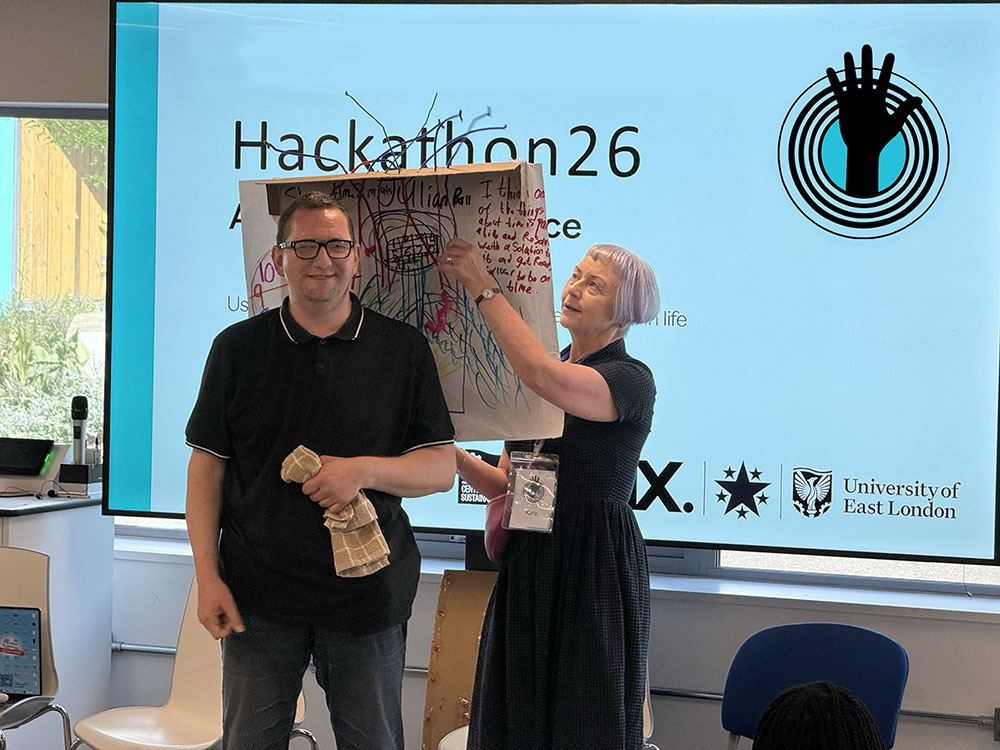
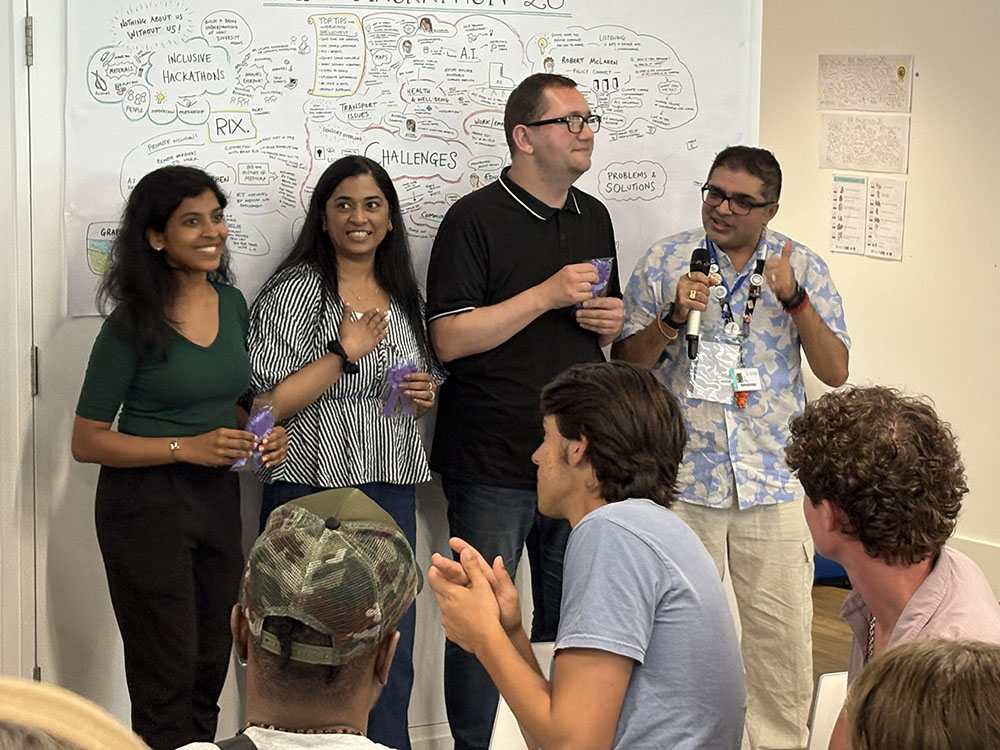
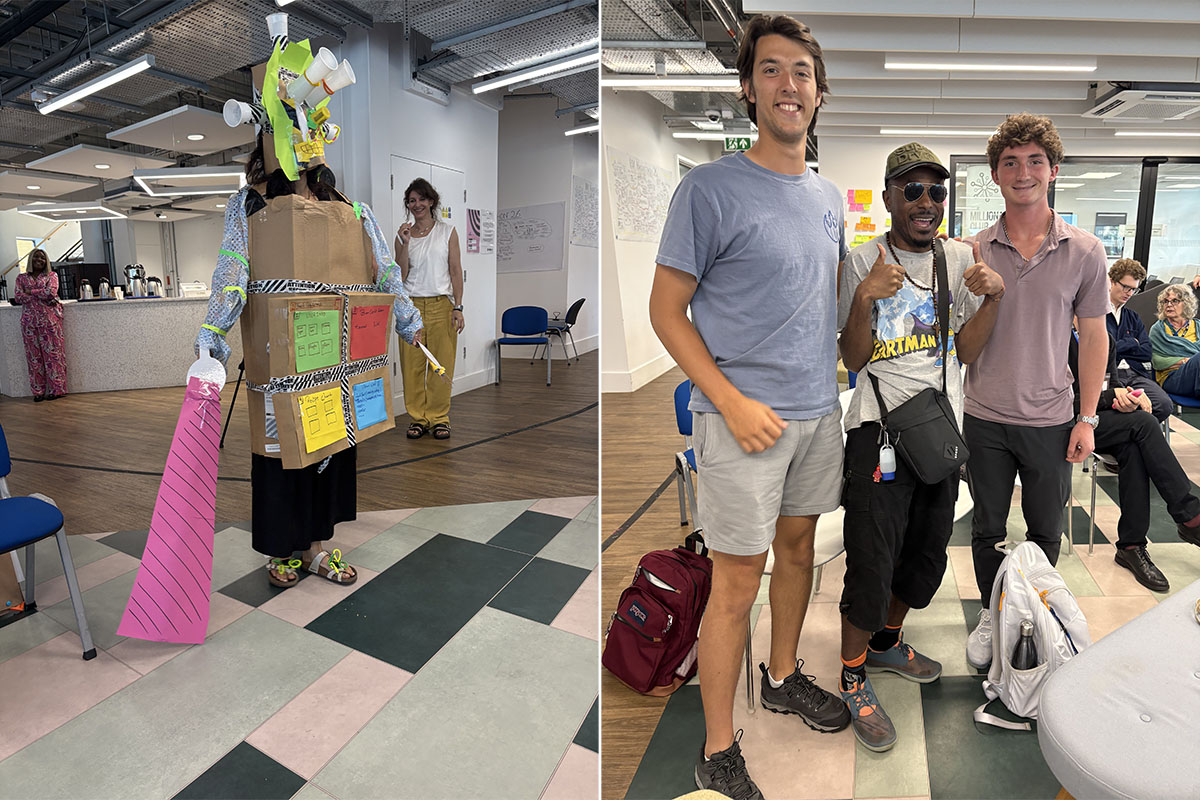
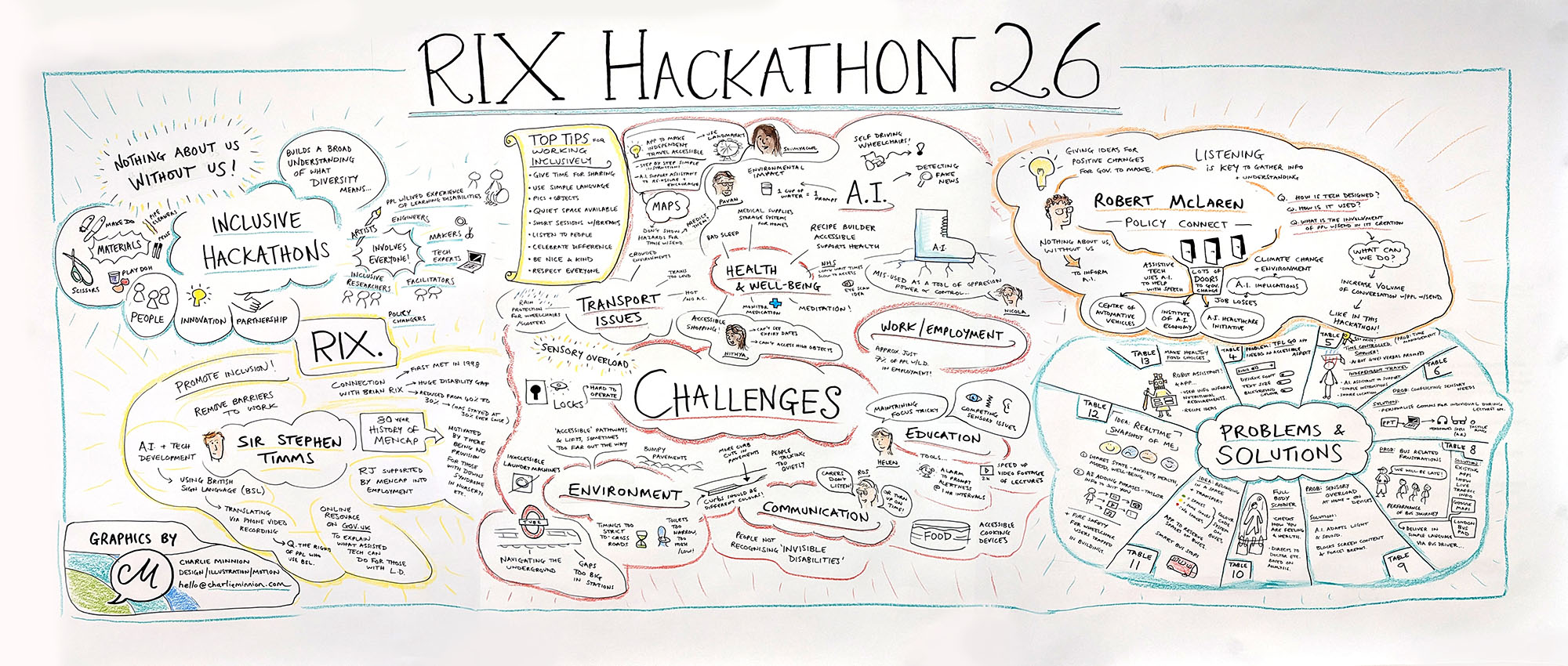
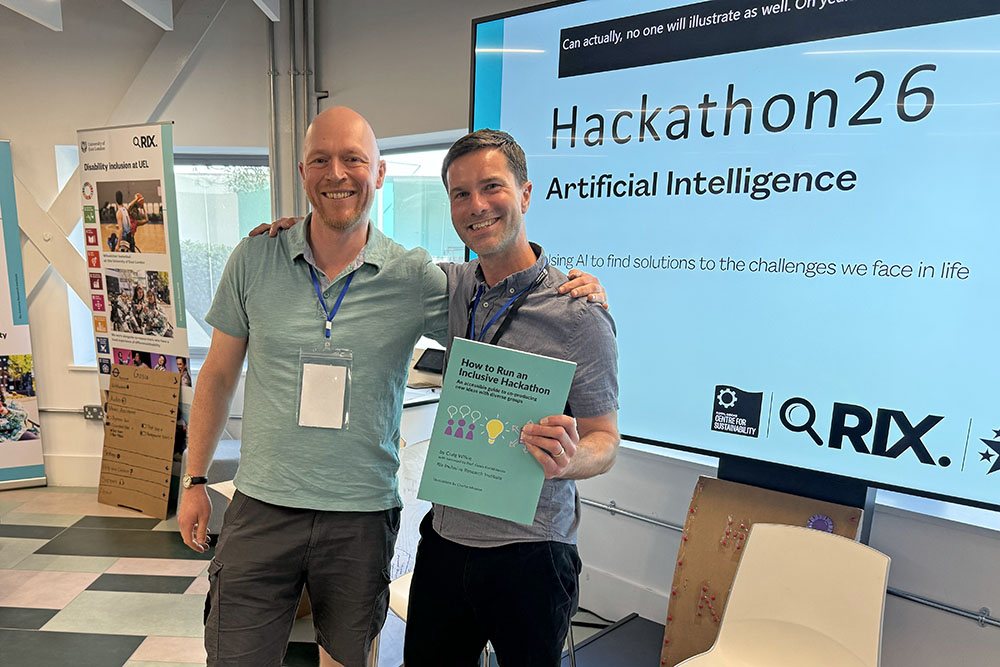
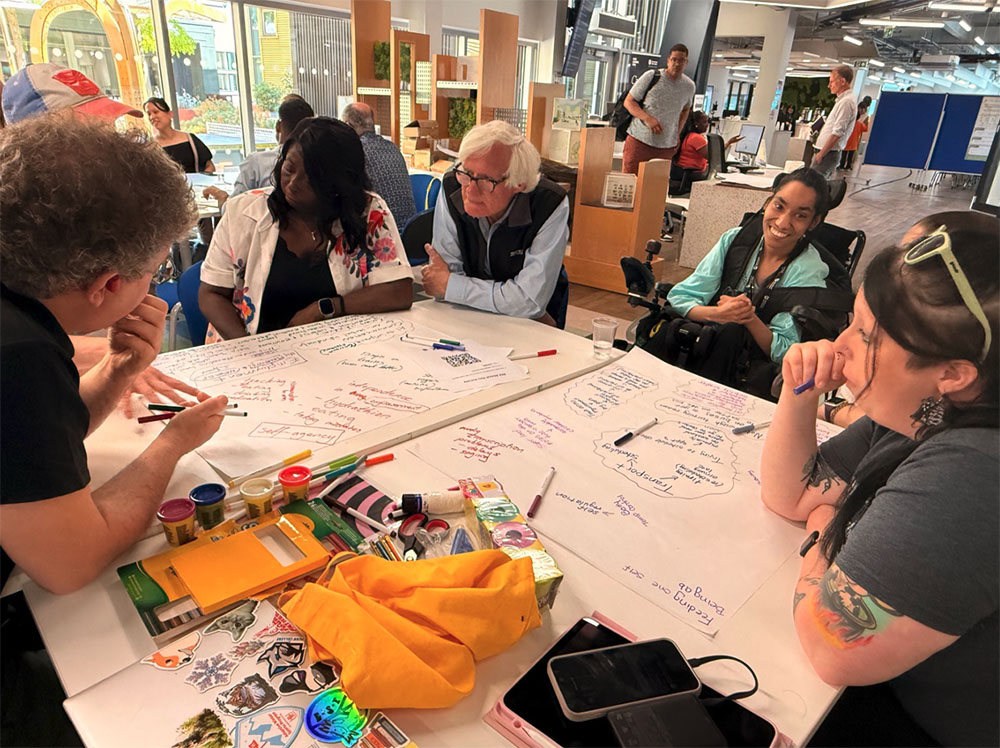
RIX Hackathon26 | Friday 19 June | 10am – 5pm
We’re excited to share this Save the date with you, with details of our third annual inclusive hackathon.
Our theme for this year will be Artificial Intelligence and accessibility.
Date
Friday 19 June 2026
Time
10am – 5pm
Venue
Royal Docks Centre for Sustainability (RDCS)
University of East London, Docklands Campus
4-6 University Way, London, E16 2RD
We’re excited to announce the launch of the new RixWiki app which is now available as a free download on the App Store (Apple) and Play Store (Android).
The Rix Wiki is a digital Обо мне tool that helps people share their story and show what good support looks like using words, pictures and videos. Its accessible design makes it easy for anyone to create and update their Wiki using the mobile app.
The app was developed in partnership with Charlie Levinson from Multi Me and his software developer, Sergei Alvinski, who helped develop the Multi Me support networking platform.
The new look Wiki is now even easier to use and includes added features to give you more customisation and accessibility options.
Settings
Dark mode – see screenshots below
Text to speech – can be turned on/off in Settings
Voice – choose from a large selection of female and male voices
Font size – small, medium, large, extra large
The RixWiki app also has a built in Media gallery where you can organise your pictures, videos, sound files and documents in one place.
If you already have a RIX Wiki just download the RixWiki app to your smartphone or tablet and log in to the app with.your normal username and password.
If you are interested in having a RIX Wiki but don’t have one yet, please head over to rixsoftware.org where you can find out more.
Screenshots of the RixWiki app on iPhoneScreenshots of the RixWiki app on iPadScreenshots of the RixWiki app on iPad in dark modeThe RixWiki app is available for Apple and Android devices
Activoté - это оригинальная, физическая, пародийная, музыкальная ансамблевая театральная постановка, разработанная и написанная при участии молодых людей из Ньюхэма. Рецензию на спектакль, состоявшийся в пятницу 7 ноября 2025 года в театре The Source, Стратфорд, смотрите ниже.
Целью постановки было побудить молодых людей обрести уверенность в своих политических силах (что особенно важно сейчас, когда правительство намерено снизить возраст голосования до 16 лет). Activoté стремится дать зрителям возможность ощутить ценность своего голоса, поскольку их права постепенно отнимаются в режиме реального времени.
Это стало кульминацией двух успешных туров по школам и зонам расширения прав и возможностей молодежи Ньюхэма осенью 2024 и осенью 2025 года. После спектакля мы провели форум, на котором выступили молодые люди из местных молодежных проектов, а также коллеги и студенты из UEL, в том числе группа молодых людей с ограниченными возможностями в обучении Youth Empowerment Zones. В пятницу утром в The Source на спектакле и семинаре присутствовали 150 молодых людей из школ The Lamas, Azhar Academy, Eastbury Community School и Eastleigh School. Спектакль также посетил школу Плашет и Листер.
Участие зрителей в Activoté
Этот доступный, анархический и комедийный спектакль рассказывает о подвигах четырех чрезвычайно голодных персонажей, которые голосуют за еду. Персонажи общаются с помощью физического языка и неизвестного языка. То, что начинается как современный слэпстик, вскоре принимает мрачный оборот, когда два персонажа понимают, что они могут контролировать происходящее, решая, кто может голосовать.
С помощью театра Activoté исследует темы расширения прав и возможностей молодежи, ответственности перед обществом и личностного роста. Режиссером и соавтором Activoté является Саша Боннер (креативный продюсер Learning Stages) и Питер Моретон (AD в Learning Stages и ранее актер RSC и Cheek By Jowl). Activoté был поставлен и разработан выпускниками UEL Томас Клейз, Инес Кулон, Эшли Лайон Дюрант, Лаки Олучукву Элуэме и Линда Фернандеш, В рамках успешной пилотной программы по трудоустройству выпускников.
Компания Activoté была разработана Этапы обучения (ранее Applecart Arts) в партнерстве с Университетом Восточного Лондона и Службой по расширению прав и возможностей молодежи Ньюхэма, при финансовой поддержке Culture In Newham, Британского совета по искусству, Службы по расширению прав и возможностей молодежи и The Source.
Отзыв о ресторане Activoté at The Source
Спектакль дает молодым зрителям возможность осознать ценность своего политического влияния. Гастролируя в течение последнего года, "Активоте" продолжает вдохновлять молодых зрителей, внушая им силу личного голоса и важность защиты права каждого человека на участие в жизни общества, особенно когда все чаще возникают дискуссии о снижении избирательного возраста до 16 лет. Эта театральная постановка исследует, что происходит, когда в обществе ограничивают право голоса. Она рассказывает о четырех голодных героях, которые соревнуются за голоса зрителей в обмен на еду. По мере того как спектакль разворачивается, легкомысленное соревнование становится все более мрачным, показывая, как легко может сместиться власть, когда некоторые люди решают, кто может голосовать, а кто нет.
Activoté в The Source
Мне было интересно, что предложит эта пьеса. Когда я пришла, меня пригласили присесть в круг перед началом спектакля в фойе. Мы прошли по кругу, представившись и рассказав, что привело нас сюда: некоторые сказали, что их пригласили, а моя мама сказала, что ей было любопытно. Это повлияло на дальнейший разговор, в котором я рассказала о том, что изучаю в университете (социальную работу), и о том, как будет выглядеть эта роль. Другой человек упомянул, что социальная работа предполагает профессиональное любопытство, - это замечание вызвало во мне интерес и заставило задуматься по дороге домой. Это общение подготовило меня к предстоящему спектаклю. Пьеса раскрывала темы жадности и коррупции, используя тарабарщину и физический театр. Я считаю, что зрителям не нужна была понятная речь, чтобы уловить концепцию пьесы, и, по сути, это сделало ее более доступной. Пьеса исследовала тонкую грань между диктатурой и демократией и, применительно к современному обществу, показала, как часто людям дают идею выбора, но реальность этого не отражает.
Бьянка Филлипс, студентка второго курса бакалавриата (с отличием) по социальной работе в UEL
Я всегда интересуюсь тем, как учится моя дочь в университете, так как она всегда держит меня в курсе своей поездки на практику и работы, которую ей приходится выполнять. Она пригласила меня на спектакль, организованный ее университетом. Это был мой первый поход в театр, и я могу сказать, что это был замечательный опыт; он показал мне, как важно делиться и как люди, занимающие более высокое положение, плохо обращаются с теми, кто ниже их. Если бы я что-то вынесла из этой пьесы, то это то, что из любой ситуации нужно извлекать позитив, чтобы попытаться улучшить общество". (Кристина, мать Бьянки)
В молодежных зонах: Любой молодой человек со всего района может прийти и присоединиться к команде, которая совместно проводит молодежные гражданские собрания (Today Not Tomorrow). Молодые люди проводят творческие, интерактивные мероприятия раз в квартал, посвященные проблеме, которую они хотят решить, чтобы добиться перемен.
Связаться с cassandra.delisser@newham.gov.uk для получения дополнительной информации.
В школьных и молодежных зонах: Выдвигайте свою кандидатуру в члены Молодежного парламента Великобритании.
Связаться с tim.aldcroft@newham.gov.uk для получения дополнительной информации.
Что вы можете сделать, чтобы проверить СМИ на предвзятость - SIFT
Остановить - Прежде чем читать или делиться информацией, подумайте о том, что вы знаете об источнике, и о своей собственной эмоциональной реакции.
Исследуйте источник - Узнайте о репутации источника, его финансировании и потенциальной предвзятости, прежде чем читать сам контент.
Найдите лучшее покрытие - Поищите другие авторитетные источники или организации, проверяющие факты, чтобы подтвердить информацию или предоставить более широкий контекст.
Отслеживайте утверждения, цитаты и материалы в оригинальном контексте - Найдите первоисточник утверждения или данных, чтобы убедиться, что они не были вырваны из контекста или искажены.
Агентство - способность человека действовать, делать выбор и добиваться перемен, если он этого хочет - больших или малых.
Гражданская активность - Участвовать в жизни общества или в общественной жизни - это может означать участие в волонтерской деятельности, подписание или создание петиции, участие в мирном протесте, волонтерство и помощь в обществе, а также высказывание мнений о том, что для вас важно.
Гражданское общество - организации, группы и отдельные люди (вне правительства), которые помогают формировать и поддерживать свои сообщества - например, благотворительные организации, молодежные группы, участники кампаний и общественные организаторы.
Демократия - Система государственного управления, при которой люди имеют право голоса, обычно путем голосования и выбора представителей.
Демократические институты - формальные системы, которые помогают управлять нашей демократией - такие как парламент, местные советы и суды.
Демократическое участие - принимать участие в принятии решений - например, регистрироваться и голосовать, выдвигать свою кандидатуру на выборах или участвовать в дискуссиях, помогающих принимать решения в вашем районе или регионе, или по всей стране.
Демократические процессы - практические методы работы демократии - выборы, дебаты, принятие законов и привлечение лидеров к ответственности.
Выборы - когда люди голосуют, чтобы выбрать тех, кто представляет их интересы - на местном, региональном, национальном или международном уровне.
Беспартийные - не поддерживать и не пропагандировать какую-либо политическую партию. Быть беспартийным - значит предоставлять пространство для всех взглядов и помогать людям свободно исследовать свои собственные мнения.
Политика - планы или правила, которые определяют, как организации, правительства или люди принимают решения и осуществляют действия. В демократическом обществе люди могут влиять на политику в таких областях, как жилье, образование, здравоохранение, окружающая среда и т. д.
Политика - Как принимаются решения по многим аспектам нашей жизни: кто обладает властью, как они ее используют и как влияют на решения. Речь идет не только о политиках или партиях, но и о проблемах, которые волнуют людей, о людях, которые нас представляют, и о системах, которые формируют наш район, регион, страну и весь мир.
Мощность - способность принимать решения, влиять на других или определять порядок действий. Власть может существовать в отдельных людях, правительствах, сообществах, учреждениях или повседневных отношениях.
Представитель: Кто-то (например, член парламента или член совета), кто избран или выбран, чтобы говорить или действовать от имени.
В субботу 18 октября компания Rix Inclusive Research провела День агитации с Нейромышечный альянс "Следопыты в Центре устойчивого развития Королевских доков в кампусе Доклендс.
Несколько докладчиков рассказали о своем опыте проведения кампаний за права инвалидов и социальную справедливость. Сью рассказала нам о прямых действиях, в которых она принимала участие в 1980-х годах. Она вместе с другими инвалидами приковывала себя цепями к автобусам на Оксфорд-стрит, захватывала правительственные учреждения и нападала на 15 членов парламента, которые постоянно пытались помешать принятию Закона об инвалидности и дискриминации (1995). Это вдохновило меня на то, что протесты и другие мирные формы протеста, такие как приковывание себя к автобусу, реально и ощутимо меняют общество в интересах людей с ограниченными возможностями. Я был потрясен тем, что потребовалось так много кампаний, чтобы заставить правительство сделать проезд в поездах и автобусах доступным.
Кампания за то, чтобы сделать общественный транспорт полностью доступным для всех
Благодаря таким людям, как Сью, я теперь могу рассчитывать на то, что весь общественный транспорт будет доступным, равно как и общественные здания. Сейчас это не всегда так, но, по крайней мере, у нас есть законное право на это, которого не было до принятия закона 1995 года.
Другие выступающие рассказали о том, как они боролись за доступность местной железнодорожной станции и за увеличение социальных пакетов. Сэм, сотрудник отдела кампаний и исследований Pathfinders, рассказал о своей борьбе за доступное жилье в Бристоле, где он и его кот Барри живут. Он также рассказал нам о новой кампании по социальному уходу и других исследованиях, в которых участвует Pathfinders. Во второй половине дня было объявлено о новой инициативе - кампании ‘Подъемники в отелях’.
Напульсник кампании Don't Wing It, Sling It
Эта кампания призвана убедить отели по всей стране установить подъемники в своих спальнях, чтобы гости с ограниченными возможностями могли там останавливаться. Если вы инвалид, то найти место для проживания может стать настоящей проблемой, поэтому мы надеемся, что благодаря этой кампании больше людей поймут, что необходимо сделать места для проживания доступными.
Сол Катлин, соисследователь RIX
Мы очень рады, что стали участниками одного из пилотных проектов Launchpad для London Social Ventures по поиску инновационных решений проблем в сфере здравоохранения и социального обеспечения.
Обмен историями® Это уникальная программа, которая помогает людям с серьезными проблемами в общении вспоминать и делиться повседневным опытом в форме совместных бесед.
Это способствует развитию идентичности, памяти, сообщества, крепких межличностных отношений, умения слушать, самостоятельности и равенства.
Совместное чтение рассказов решает проблемы одиночества и благополучия, обеспечивая психическую стимуляцию.
Это способствует развитию независимости - выбор зависит от запоминания опыта и последствий предыдущего выбора.
Это способствует высокому качеству ухода, лучшему знанию жителей и более эффективному общению между персоналом и жителями.
Это доставляет сотрудникам удовольствие и дает ощущение цели.
Пилотный проект будет разработан и оценен в течение следующих шести месяцев в партнерстве с поставщиками услуг и командой Social Ventures.
Мы используем файлы cookie, чтобы помочь нам понять, как люди используют этот сайт, и обеспечить лучший пользовательский опыт. Файлы cookie не хранят никакой конфиденциальной информации и никогда не передаются третьим лицам. Управление файлами cookieПринимать файлы cookie
Политика конфиденциальности и использования файлов cookie
Обзор конфиденциальности
Этот сайт использует файлы cookie для улучшения вашего восприятия во время навигации по сайту. Из этих файлов cookie те, которые относятся к категории необходимых, сохраняются в вашем браузере, поскольку они необходимы для работы основных функций сайта. Мы также используем сторонние файлы cookie, которые помогают нам анализировать и понимать, как вы используете этот сайт. Эти файлы cookie будут храниться в вашем браузере только с вашего согласия. У вас также есть возможность отказаться от использования этих файлов. Однако отказ от некоторых из них может повлиять на удобство пользования сайтом.
Необходимые файлы cookie абсолютно необходимы для правильного функционирования сайта. В эту категорию входят только те файлы cookie, которые обеспечивают базовую функциональность и безопасность сайта. Эти файлы cookie не хранят никакой личной информации.
Любые файлы cookie, которые не являются особенно необходимыми для функционирования сайта и используются специально для сбора личных данных пользователей с помощью аналитики, рекламы и других встроенных элементов, называются "ненужными файлами cookie". Перед использованием этих файлов на вашем сайте необходимо получить согласие пользователя.