
All of the team at Rix Research & Media are deeply saddened to hear of the passing of Lord Rix. The Rix centre is named in honour of Brian Rix and he was instrumental in establishing research in technology for people with learning disabilities at UEL at the turn of the century.

Lord Rix passed away on Saturday 20th August at the age of 92. In addition to being a well known stage actor and entertainer, Lord Rix was a tireless campaigner for the learning disability community and was also the University of East London’s first Chancellor from 1997 to 2012. In 2014 he helped establish The Rix Centre at the university, now Rix Research & Media, which was founded to explore and develop ways of using new technologies to transform and enrich the lives of people with learning disabilities.

Since 2014, the Centre has pursued action research in partnership with disabled people, their families and the various professionals that provide for their education, health and care – and none of this might have been achieved without the support and inspiration of Lord Rix.

Here at Rix Research & Media, we will continue to feel the impact of his passionate belief in providing people with disabilities with opportunities to thrive. He constantly supported and guided our work and was a true inspiration. He will be greatly missed.
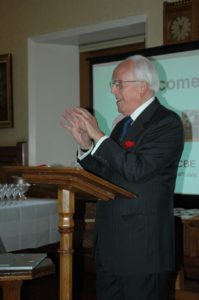
Lord Rix speaking at the House of Lord’s in 2009 for the launch of the Rix Centre’s Click Start project

The Rix Inclusive Research team have produced this short video that features the voices of the people with learning disability with whom Lord Rix has worked with over the years. They appear on camera to celebrate his life and achievements and share their experiences of working with Brian as his colleagues. Their moving comments highlight the affect that knowing Brian has had on them as individuals as well as the tremendous contribution he has made to their ongoing campaign to achieve equality as disabled people in our society. The video will be a key contribution to Lord Rix’s memorial.

From the Archive: Brian Rix presents ‘Let’s Go!’ – Lord Rix’s enduring commitment to media advocacy for people with learning disabilities is reflected in this vintage video extract from the ‘All About Us!’ DVD, produced to accompany the book that he wrote of the same name, published by Mencap in 2006. The ‘Let’s Go!’ series featured various day-to-day activities that could help enable independent living for young disabled people with the right support, such as using the telephone, traveling on public transport and just going out and having a good time! ‘Let’s Go!’ included sequences in which people with learning disabilities used the technologies of the time, including SLR cameras and computers. The programme, shown every Sunday morning on the BBC, actively promoted the use of new and emerging technologies to directly benefit people with learning disabilities and presented the vision of inclusion for this population that Brian campaigned for in so many other ways throughout his life. Lord Rix instilled the same goals and values at the heart of the Rix Centre as it was established more than 40 years later at the University of East London.
“A Wiki can be an amazing multi-faceted tool that can help people at all stages of life, in different ways.”

Trisha Holmes is Project Manager 0-65 Disability Service at Croydon Council. Trisha is implementing Multimedia Advocacy and Rix Wikis throughout the borough, to support children and young people with special educational needs and disabilities.  She has also set up a post-16 project using Wikis to help young people transition into adulthood.

These are her words:

“Why am I so passionate about Wikis?  They are so empowering.  A lot of children and young people with additional needs and disabilities are reduced to problems on the page. With a Wiki, you immediately turn the problem upside-down and you actually see the human being.”

“I’m working with parents who have started to develop their Wikis, including one who has a child with complex health needs and who has at least 17 different carers.  Her mum could see the value of a Wiki, to show what she can do, how she communicates and to teach the carers how to care for her when they know she’s in pain, or she’s hungry or thirsty.  It’s incredibly powerful.”

“Another mum shared her son’s Wiki with us.  She explained that Harry can’t have a conversation with anyone easily and won’t look anyone in the eye.  But she showed a video of him standing on stage at the Royal Albert Hall, in front of hundreds of people, playing in an orchestra.  And that’s the power of a Wiki.  Suddenly you look at Harry in a different way.”

Post 16 project

“There’s a group of young people and we want to work with them to provide pathways into education and employment for them.  These are young people who would have been sent away to residential schools out of their own community.  So they would have to come back and start to re-establish their social network, having lost touch with their school friends and not knowing how to get around in Croydon.  So we’re keeping them in the community.  They have a formal education two days a week then spend time at the local youth centre learning life skills.
“We’re helping them transition to adulthood.   The young people have set up their Wiki, calling it ‘Access to Success’ – it’s a personalised study programme.

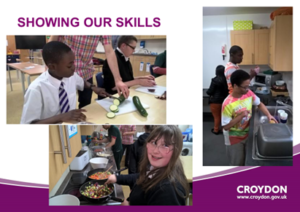
“So they are learning practical skills, about being safe, getting out and about, cooking, staying healthy, working together as a team, and making friends.”
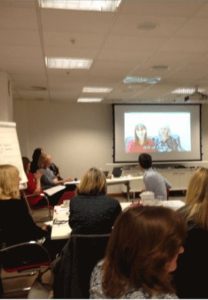
Click the video below to see a short video of Trisha Holmes sharing her experience of implementing Multimedia Advocacy and Rix Wikis in Croydon.

The Central North West London Mental Health Rehabilitation Service (CNWL) promotes digital inclusion to ensure that its service users are not excluded from accessing new developments which could enhance their wellbeing and social inclusion.

CNWL began a project to develop a Digital Health and Wellbeing Plan in partnership with Rix Research & Media, a research centre at the University of East London.  Rix has developed a unique multimedia self-advocacy approach to person-centred planning, where people with learning disabilities can use Web and multimedia authoring tools to share their interests and aspirations and better explain the ways that they like to be supported.

Central to this approach is the Rix Wiki.  Co-produced with users, parents and professionals, the Wiki is a simple, personal, multimedia website.  Using pictures, words, video and sound, service users can show care staff what is important to them in their lives and their support services. The approach includes confidence-building exercises and patient rights based perspective.

CNWL believed the Rix Wiki would be invaluable in supporting those who access mental health services to develop Digital Health and Wellbeing Plans.  In September 2014, CNWL undertook a pilot to evaluate the use of a Wiki for people accessing rehabilitation services.

CNWL implemented the pilot within existing resources.  Staff in in-patient rehabilitation units, including occupational therapists and an activity coordinator, worked in partnership with a Peer Trainer from the Recovery College.  Following online Multimedia Advocacy training provided by Rix, CNWL ran workshops co-produced with the Peer Trainer and service users, using iPads to overcome difficulties accessing IT and Wi-Fi in the rehabilitation units.  Staff worked with five individuals to develop personalised Rix Wikis and the Peer Trainer developed his own Wiki plan.

The project sought to improve service users’ self-advocacy skills and self-confidence, supporting positive risk taking and self-disclosure in the therapeutic relationship.  It also aimed to shift the focus of the staff/service users’ relationships in Rehabilitation Services from risk monitoring towards the creative encouragement of communication skills.

Feedback from service users and staff was positive.  Rix Wikis provide a ‘dynamic extension’ and a ‘step-up’ from the original health and wellbeing plan, allowing individuals to express themselves creatively, update their plans easily, and envisage a more positive future.

“A Wiki allows me to communicate my person and character in a way that is meaningful to me.”

In January 2015, CQC inspectors expressed support for the wider implementation of Rix Wikis.

In September 2015, CNWL, the Recovery College and Rix took forward the work to use multimedia self-advocacy in Mental Health Rehabilitation Services to produce a Digital CNWL Health and Wellbeing Plan.

In January 2016, Rix and the Recovery College completed the development of a Wiki Health and Wellbeing Plan, co-produced with Peer Trainers, and this has been incorporated into the Recovery College’s course ‘Taking Back Control’.  The course is now being run throughout this year at the College and rehabilitation units.  Staff and Peer Trainers have attended ‘Train the Trainer’ workshops to co-facilitate ‘Taking Back Control’ and ensure the approach is embedded. Peer Trainers are now actively using the Plan.

Service users supported by this approach are using ‘Wiki’ websites to contribute to their care planning and have an increased frequency of social contact as well as shorter average lengths of stay in high dependency settings.

“It is a really fantastic vehicle for celebrating a person’s strengths rather than always focusing on the negative and that is of great value within mental health services.  The Wiki is pushing the boundaries of involving people in their own care and being able to advocate for themselves.”

CNWL Peer Recovery Trainer

You can view individual case studies from CNWL by clicking below:

Waldo’s Case Study

Thea’s Case Study

Amanda’s Case Study

Santino’s Case Study

Mary Busk is a family carer who lives in London.  Her son, Alex, has complex learning and communication difficulties.

In this article for the Challenging Behaviour Foundation, Mary offers some helpful advice when planning days out as a family.

Mary and Alex have produced a Wiki which can be viewed here: https://www.rixwiki.org/rixresearch/home/alex-case-study/


The King’s Fund annual Digital Health and Care Congress 2016, taking place this week, will explore how the better use of technology and data can support and enable the developments needed to transform outcomes for patients and citizens.

Andy Minnion MBE, Professor of Media Advocacy at Rix Research & Media, has been invited by the King’s Fund to share the expert work of Rix in pioneering easy-to-use Web and multimedia tools to provide the most vulnerable patients with improved choice and control around their healthcare.

Rix applies a co-production approach to its research and development projects with particular focus on patients with intellectual disabilities and mental health issues, together with their informal supporters and the range of health and care professionals with whom they work.

Rix has produced and tested software, working methods and implementation strategies for inclusion through the application of new media for 15 years.  It has developed a unique ‘Multimedia Advocacy’ approach to person-centred planning, where patients with learning disabilities and mental health issues can create their own portfolio of multimedia content to communicate effectively their preferences, views and needs.  The patient voice is vividly articulated and the result is improved and inclusive healthcare.

Professor Minnion highlighted the work of Rix with the Central North West London Mental Health Rehabilitation Service (CNWL), which promotes digital inclusion to ensure that its service users are not excluded from accessing new developments which could enhance their wellbeing and social inclusion.

CNWL began a project to develop a Digital Health and Wellbeing Plan in partnership with Rix and, last year, successfully piloted the use of the Rix Wiki, a simple, personal, multimedia website.  Using pictures, words, video and sound, service users can show care staff and therapists what is important to them in their lives and required from their support services.

This new approach to self-management of health and wellbeing by mental health patients included confidence-building exercises and patient rights-based perspective.  It helped to improve service users’ self-advocacy skills and self-confidence, and also aimed to shift the focus of the staff/service users’ relationships in Rehabilitation Services from risk monitoring towards the creative encouragement of communication skills.

Rix Wikis are now providing a ‘dynamic extension’ and a ‘step-up’ from the original health and wellbeing plan, allowing individuals to express themselves creatively, update their plans easily, and envisage a more positive future. The work with CNWL has extended to the Recovery College with the integration of Multimedia Advocacy and Digital Health and Wellbeing Plans into their ‘Taking Back Control’ course.   Service users supported by this approach are using Wikis to contribute to their care planning and have an increased frequency of social contact as well as shorter average lengths of stay in high dependency settings.

Professor Minnion set this work in the context of a spectrum of different models of Multimedia Advocacy that have been applied in health and care settings and he charted a rapidly emerging set of digital healthcare solutions that challenge conventional perspectives on how new technologies can transform healthcare services.

He comments: “Today’s media technologies can realise patient self-advocacy and, in the process, improve the standard of care for the most vulnerable.  The King’s Fund Congress highlighted how, after a decade of investment into ‘top-down’ models of tele-health implementation, the adoption of digital healthcare solutions still faces considerable resistance.

“Multimedia Advocacy is a fresh approach, with patient-run technical solutions providing a new paradigm for Digital Health that puts the service-user experience at the centre. Using simple social media tools and consumer technologies, we now have systems that can potentially place health management firmly in the hands of the most vulnerable patients and their immediate support circles. This model turns conventional wisdom of Digital Health on its head – and promises to improve the patient experience in the process.

“Multimedia Advocacy can achieve real efficiency in multi-agency working and it is this re-modelling of Digital Health and Care that could provide significant economies for tomorrow’s health service. The challenge, of course, is that this approach demands significant cultural change for the healthcare sector.”

Melissa Johns is a Higher Level Teaching Assistant at the Royal Free Hospital Children’s School and recently has been in charge of implementing the use of the Rix Wiki. She was first introduced to the Rix Wiki by her headteacher who had wanted to bring the Rix Wiki into the service since the day he got on the job. The Rix Wiki is most popularly used as a communication and self-advocacy tool for individuals with intellectual disabilities so Melissa had to create a new system for using the Rix Wiki that would be more applicable for her students. The hospital school is primarily focused on teenagers with mental health difficulties.

“We don’t use a lot of the video and sound aspects because our students do not need them so their Wikis are primarily text and pictures. However, there are days when a student does not want to speak at all and it is very important that he or she still has a say in matters concerning them.”

These students have a lot of professionals meetings that they are required to attend. At some meetings there can be up to ten professionals. “There are social workers, consultants, psychiatrists, and parents all making decisions for this one person, and this is where the Wiki comes in” Melissa explains.

The Rix Wiki allows the student to express his or her opinions, goals, and feelings even when they are having a really difficult day or are too embarrassed to speak up. In many ways it ensures that the individual’s voice is always being heard. Melissa says the purpose of having the wiki is to “put the student at the center of their own planning and in all of the decisions that are being made around them.”

There are currently ten students using the Rix Wiki at the Royal Free Children’s School. All of them are between the ages of 15 and 17 and dealing with mental health challenges, but this doesn’t make them any less teenagers.

“Most of them have a very difficult time writing about how they would like to be supported because at that age you don’t want to be asking for help and when you have a mental health challenge this becomes even more difficult” Melissa says.

Motivation is also another issue that Melissa has run into but last term she was able to come up with a solution.

“I have a list of set tasks, and I give the students a series of prompts and questions to guide them in their writing. We noticed that when given a prompt the students find it much easier to write” she explained.

The Rix Wikis are also very helpful to the staff at Royal Free Hospital School.

“We are a really small provision here and it is a very personalized learning environment. The Wikis keep everyone in the bubble” she explains. “A teacher can look at a student’s Wiki and see how he or she wants to be supported and the goals he or she wants to achieve and then implement that into the lesson.”

The wikis also help students in their transition into college.

“Since it is electronic it is easier to share with other professionals. When one of our students is going to college we have the option of sending their support coordinator the student’s Wiki, and by having that information it makes it easier for both the support coordinator and the student” Melissa says.

Ultimately Melissa says “The Wiki gives our students a voice again. It is really hard to expect a teenager with mental health difficulties to be put in a room with people and say this is what I want, this will make me better, and this is how I want you to support me. Although the Wiki doesn’t provide the exact answer to those questions it certainly aids them in finding a solution.”

Melissa has recently been awarded by Rix Inclusive Research as a Rix Wiki Champion due to her fantastic work with use of Rix Wiki’s.

My name is Sophia Schwarze and I am a student at the Health Professions school at Samford University in Birmingham, Alabama. In the spring of 2016 I was given the opportunity to study in London. It was my advisor who encouraged me to apply for an internship. Being only a second year in university I knew that finding an internship would be a bit more difficult. Although I am studying to become an Occupational Therapist, it was my passion for working with individuals with intellectual disabilities that opened the door to a small organization called Rix Inclusive Research.

Rix Inclusive Research is a company out of the University of East London that uses Multimedia Advocacy and person-centered planning to promote self-advocacy and human rights of individuals with intellectual disabilities. Having done a lot of work in this community I was somewhat aware of the various technologies used to help individuals with communication but ‘Multimedia Advocacy’ and ‘person-centred planning’ were concepts that I had never heard of. When I was first given the notification that I would be interning with Rix I was both excited and nervous. I had never interned before nor had I ever worked in an office.

It became clear very early on that there would be no micro-managing from the staff. On the first day I was given an assignment and everyone went back to doing their own work. At first I felt I might be uncomfortable with this approach but it was this trust and independent environment that really pushed me to become both more confident and more comfortable in my abilities. I never realized how much I relied on the direction and the confirmation of others. Sure I am a perfectionist and I want to make sure that I am doing the work properly the first time but Rix showed me that being confident in one’s own work and abilities from the beginning makes for a more productive and better employee.

Rix provided me with incredible opportunities both in and out of the office. I was given the opportunity to go out on my own and conduct interviews with Wiki users. Although it is primarily used for people with special needs, the Wiki’s function has been modified for a variety of different groups. Recently the Wiki has made its way into the mental health community. Whether it is being used as a personal recovery plan or as a communicative aid, the functions of the Wiki are designed to best suit the needs of the individual. One of my main tasks was to write case studies of individuals using wikis within the mental health field. It was incredible to see how a single product could be transformed to fulfill the personal needs of one individual. Having never conducted an interview before I had a lot to learn but of course with practice comes knowledge and eventually skill. Through the interviews I was able to meet some incredible people and see the Wiki being used in everyday life scenarios. I learned how to ask questions, how to gather material, and how to compose it into an article that truly reflects the individual’s story and feelings.

One of my favorite opportunities was being able to work with Ajay. Ajay, also known as the Wiki Master, is an employee and spokesperson with learning difficulties at Rix. Recently Ajay had been enrolled in a European Computer Driver License course which covered computer software programs such as Microsoft Word, Excel, Powerpoint, and Project. On Wednesday afternoons Ajay and I would go through the modules and quiz questions together talking things through and coming up with fun ways to memorize the material. Working with Ajay was not only fun but it gave me a glimpse into the kind of work I would be doing in the future and I have to say I am pretty excited.

Communication is something we use everyday and often we take it for granted. For those with intellectual disabilities or mental health challenges, being able to communicate can be difficult. Rix has dedicated itself to improving the lives of these individuals by giving them the tools they need to vocalize their thoughts, needs, and aspirations. Whether it is through video, picture, or text, every person deserves to have a say in their own lives and wellbeing.

Rix is something really special. The work that they do and the people they serve says a lot about the kind of people who work within its walls. Although it is a small team, everyone is extremely hard working and supportive. They have taught me so much and they have given me so many opportunities to be apart of something so much bigger than myself. It has only been three months but I am going to miss seeing the people here and I can not wait to see what amazing thing they do next.

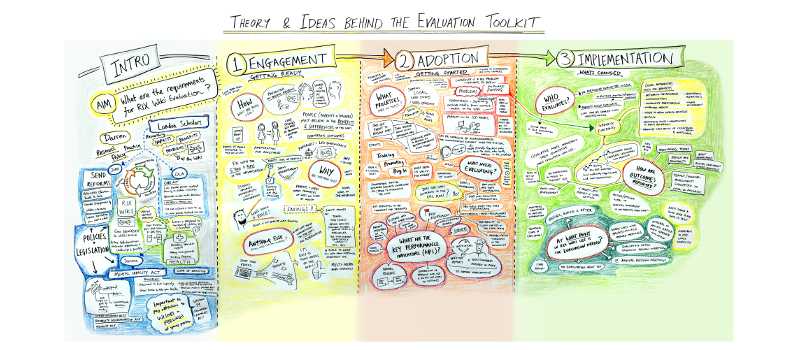
On Wednesday 2nd May 2016, Rix Inclusive Research along with their London Scholars and colleague Darren Sharpe from IHHD (Institute for Health and Human Development) at the University of East London, hosted the first Rix Innovation Lab.

The innovation labs aim to aid in creating a Rix Wiki Evaluation Toolkit. The aims of this toolkit will be to develop a framework to sustain the use and implementation of Rix Wikis, within schools, health and social care services, as well as capture the impact of Rix Wikis within these services.

The day was attended by various professionals from a range of schools, services and local authorities and some great discussion were had.

The event consisted of discussions on the following topics:

  • How the Rix Wiki corresponds with Legislative framework, such as Mental Capacity Act, Care Act, SEND Reforms etc.
  • Why each service/organisation purchased the Rix Wiki?
  • How each service/organisation is using the Rix Wiki?
  • What processes are in place and what are the KPI’s (Key Performance Indicators)?
  • Current evaluation processes?
  • What needs to be evaluated?

The discussions were all very interesting and we will now look to use these discussions to prepare for our second Innovation Lab.

We would like to thank everybody who attended, your contributions were greatly appreciated, and we look forward to seeing you all at our second Innovation Lab!

Another thank you to our Graphic Facilitator for the day Charlie Minnion, who was able to capture all of our discussions in a graphical illustration.

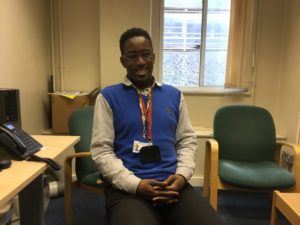
Santino Vassell is an associate peer recovery trainer at CNWL’s Recovery and Wellbeing College. He teaches a course at the college working with individuals with mental health and learning difficulties and he refers to this as his first real job. Santino is able to offer a unique perspective in the college as he himself has a learning disability as well as a mental health disability.
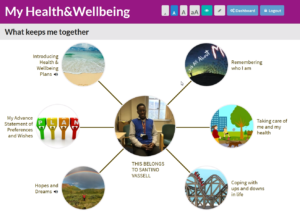
Santino was first introduced to the Rix Wiki in the summer of 2014 by his friend and Deputy Manager at the college, Amanda Bailey.

“At first I thought it was going to be really hard,” Santino says, “but I’m really enjoying it. The Wiki is simple and straight to the point.  It’s interactive and easy to use.”

He attended a two-week Wiki Builder’s course with two of his fellow recovery trainers. Santino enjoys the person-centred structure of the Wiki and says that this makes it easier for people with mental health and learning difficulties to express themselves. He describes a Wiki as a story about you, told by you. “You can put your own pictures, your own writing, and you can even put your favourite songs on it! It’s a fabulous and brilliant tool.”
The Wiki is entirely owned by the user and he or she can choose who else can see the Wiki, and whether they see either the whole Wiki or only a specific section or sections.  “I also like that the Wiki is completely private and only the people I want to can see it, so it can be used to communicate with doctors and other professionals,” he adds.

For Santino, the Recovery College has not only given him a new beginning, but a job that he loves and allows him to do what he is most passionate about – helping people. The Wiki is a tool that helps Santino to do his job. “Using my Wiki helps me to express myself to other people. It helps me to encourage and support others. I have a Wiki so that I can help people like myself.”

Bexley Voice Wiki shows its power of communication at a DfE event

Bexley Voice For Special Needs Children (BV) is small charity, comprising volunteer parents and carers, which supports families of children and young people with special needs and disabilities age 0-25. We offer a programme of visits to all the schools in Bexley as well as meeting with professionals and our Local Authority. We generally have two volunteers attend.
At BV, we have been piloting the use of a Rix Wiki for our own forum, to help us with the visits and presentations, and have been delighted with the results. As parent volunteers, we often have ’emergencies’ where one person is unable to attend. By using a Wiki, we can be confident that we are presenting the correct and full information, without the need for a second person to be present.

With invaluable support from Sam Goncalves, one of our parents, the BV Wiki has enabled our team of volunteers to offer more detailed information to our parents and carers at the touch of a button.  There is so much information that we need to give out and it’s not always possible to retain it all.  This way, the volunteers know that they can visit schools and go to meetings, and present all the information accurately, for example, on the SEND Reforms, EHC Plans, all about Bexley Voice membership, support organisations and benefits advice. We can spend less time training the volunteers to present to schools, as the relevant information is already there to show to the parents or professionals. We also find that it’s more engaging for parents to watch the different short videos, rather than us talking for two hours!

Recently, our forum Wiki helped us with a real challenge.  As BV is a member of the National Network of Parent Carer Forums (NNPCF), we were asked to create a new private Facebook Group to enable the 32 London NNPCF forums to share information. As part of this project, we were invited by Contact A Family to showcase a presentation at the Department of Education to all of the London forums and professionals from the DofE, all about the new Facebook Group.

Both myself and Juli Atkinson (BV Parent Coordinator) were extremely nervous to say the least, at the thought of presenting to such a large audience of professionals. We were concerned about missing out vital information to ensure the network of forums understood how to use the new Facebook Group. As we are all parent/carers experiencing similar issues, we wanted to be informal and relaxed but also be professional and informative. So it was suggested that we add a new section to our forum Wiki; a great way to introduce how we at BV are involved at a regional level.

We enjoyed filming the Wiki information sections, especially being able to do re-takes so that the information was correct.  Using video clips to explain the various sections (showing me at my computer) was much more visually engaging.  And knowing the exact timing of the presentation also helped with the planning of the day’s agenda.

Once the Wiki section about the Facebook Group was set up, both Juli and I were much more relaxed.  Just knowing that if either one of us was unable to attend or got ‘stage fright’ on the day, that it was all prepared beforehand made such a massive difference to our presentation. The Wiki was very easy to use, just a few clicks and we were able to sit back and watch the audience’s positive reaction.

It was so well received, we had great feedback from many attendees and we would certainly use a Wiki for many types of presentations in the future. It is easy to use, fun to film, can be updated regularly if required and takes a lot of stress out of presenting!  We even have a video from a Local Authority professional on there now talking about our forum’s valuable contribution.

Thanks to Sam and the Wiki, which really did make such a difference!

Rix Research is working with the Foundation for Research and Technology Hellas (FORTH) in Greece on a new, two-year project funded by Erasmus+ KA2: Co-operation for Innovation and the Exchange of Good Practices. The project, called Puzzle, is a Strategic Partnership for adult education and also involves agencies from Sweden, Poland and Lithuania.

Currently, adults with intellectual disabilities (ID) in these European countries have fewer opportunities for education and training or for participating in the social and economic spheres of life. This is partly because much of the existing educational text has not been adapted to the specific needs and language skills of adults with ID, so that it can be easily understood. There is also a low take-up of suitable digital tools to support learning with adapted materials, both because the educators are not aware of the availability of such tools nor do they have the knowledge and skills to use them effectively.
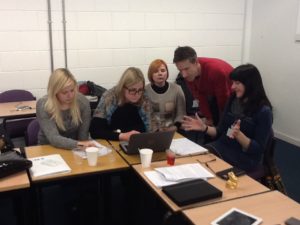
The Puzzle project brings together the particular knowledge and experience of each partner agency to address this issue. The Swedish agency, MTM, is expert on the use of the ‘easy to read’ method, which facilitates the transformation of text into forms that are easily understood by people with limited capabilities in reading. Their expertise is being combined with that of Rix Research, which is a pioneer in the inclusive development of accessible digital media tools to support people with ID. Greek agency FORTH, which has extensive experience in the development of related applications, will contribute further to the work.

Puzzle is now well underway. An international team of 12 education professionals from Greece, Poland and Lithuania is being trained by the MTM specialists on the ‘easy to read’ method and by the Rix Research specialists on using innovative technology platforms as the main way of disseminating ‘easy to read’ material. Everyone came together in February, for a week’s concentrated workshop held in London, at the Rix offices at the University of East London’s Docklands campus. The workshop was a great success as the participants explored how the quality and accessibility of information provided to people with ID can be improved.
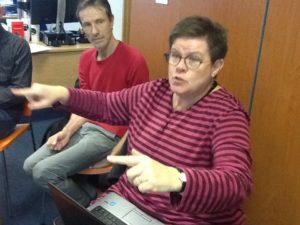
Richard Lohan, accessible information officer at Camden Council, was a guest tutor at the workshop. He presented on the exciting work he is doing in Camden to promote the use of photosymbols in easy read information. Richard uses photosymbols in Camden’s exemplary wiki portal, which details many of the information and support services available to people with ID in the borough (https://www.rixwiki.org/camden/all-our-wikis/ ). Camden has also found a way of embedding their wikis in their local offer website in order to reduce the number of external links on the page.

Richard said: “Creating and using images is a key part of presenting information in an accessible, easy read format. In Camden, we are working with local people with intellectual disabilities to create local photosymbols that have real meaning for those living in the area. It’s a great example of co-production.”

The Puzzle project will also see further research, led by Poland, on assessing how adults with ID in Greece, Poland and Lithuania access information on their human rights and their difficulties in understanding the written information. The research will lead to the development of an e-learning platform and mobile application, with information and learning materials on human rights issues produced in ‘easy to read’ format. This will then enable the design and testing of a series of ‘easy to read’ lesson plans to help people with ID understand their basic rights, for example in employment, housing, social integration and education
The active participation of people with ID in the research to create the ‘easy to read’ text and accessible web platforms is critical. By working directly with the ID community on the design and production of the information, the researchers will achieve the best possible output and ensure that people with ID can communicate effectively about themselves and their rights. The expertise that Rix Research has developed in Inclusive Research Methodologies will also help the research team to gain confidence in taking a co-production approach and exploring how to develop this further.

The implementation of Puzzle will motivate and encourage professionals and organisations in the field to develop their skills and widen considerably the learning opportunities of people with difficulties in reading comprehension. Important information and educational course materials available in ‘easy to read’ formats, on accessible digital applications, will be free for use by any person with ID and difficulties in reading comprehension in each of the countries.

Another training workshop for Puzzle is set to take place in November, hosted by the Lithuanian agency, Jaunuoliu Dienos Centras, in Panevezys. Rix Research will present the digital platform and app that it is currently developing, as part of the resource set of accessible media tools that will be made available across Europe.

Andy Minnion MBE, Professor of Media Advocacy at Rix Research & Media, said:

“There is so much excellent work being done around the world to drive positive change in the lives of people with ID and their families. Enabling people with ID to learn about, and understand, their human rights is fundamental to their ability to move towards ever greater levels of self-advocacy, self-determination and independence. I’m incredibly proud of the work that we are doing at Rix at the forefront of this change.”

Project number: 2015-1-EL01-KA204-014123

Useful websites:

www.www.rixinclusiveresearch.org

https://www.forth.gr/

http://www.mtm.se/english/

http://www.pjdc.lt/

http://www.smialek.org/

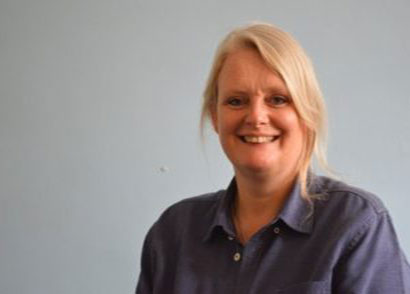
Amanda Bailey is the Deputy Manager of CNWL Recovery and Wellbeing College. She has a background in social work and nursing but she says, “It is my personal experience with mental health services that is really important in my job as a peer trainer.”
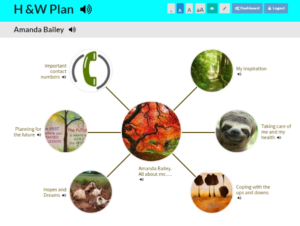
Amanda was first introduced to the Rix Wiki in October 2015. After attending training and playing on a Wiki of her own, which helped calm her worries about using new technology, Amanda started to think about the Wiki in relation to her own health plan. “I really believe the Health and Wellbeing plan to be central to my recovery because before, I was just surviving on a day to day existence.  I find it’s really useful for actually learning about yourself and not just being passive and accepting what people give to you. It helps you to learn what works and doesn’t work for you, the warning signs and triggers. I found the original Health and Wellbeing plan very useful but I think the Wiki is a step up from that. It has the same principles and values but it just allows you to be so creative.”

Amanda describes the Wiki as a dynamic extension of the Health and Wellbeing plan. “A health plan is constantly being changed and updated. Having the plan on the Wiki makes it much easier to do that, as well as keep professionals and supporters informed,” she says.
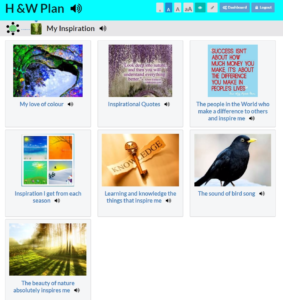
Amanda also sees the Wiki as a door, leading to a deeper understanding of oneself. “Although the paper Health and Wellbeing plan is a very effective tool, I think it’s quite constraining when you’re filling it in. It’s all words and boxes. It’s very much about who you are in the present. But when you try to do this on the Wiki, you start putting things in, images and links and you start thinking, ‘Oh, I might try that or I want to do that someday.’ It completely opens your world up.”

For Amanda building her Wiki made her realise what she really enjoyed and helped her to discover new things that she wanted to do in the future, for example, to walk a half marathon.
For those who are considering a Wiki, Amanda encourages people not to be put off by technology. “It’s really important to learn from someone who has their own Wiki and has had time to develop it. That way you have something to reference.” She also stresses the importance of understanding the Health and Wellbeing plan “in terms of getting to know yourself, why that is so important, and how that can make such a difference.”

Lastly Amanda says it is important to understand that the Wiki takes time to develop. “It’s not something you can do in a week. It takes time and, as you evolve, your Wiki will evolve too.  I think the Wiki is amazing! I feel so excited about its use in so many different areas of healthcare and I think it would really appeal to younger people who are so skilled with technology and mobile phones.”

[/spb_text_block]

Rix Research & Media is delighted that Charlton Park Academy has been shortlisted in the prestigious annual TES Schools Awards, in the Alternative Provision category.  This category recognises the invaluable support to pupils offered by these schools, which make sure that children who may not be able to attend conventional school do not go without the great educational experience they deserve.

Charlton Park Academy is a successful secondary special academy in Greenwich that offers a high quality, individualised approach to education to students with special educational needs.  It has been working with Rix Research & Media for over three years, to embed a Multimedia Advocacy approach through the use of Rix Wikis.

Wikis are simple, accessible, secure and easy to build personal websites which can be used to create multimedia person-centred plans that use pictures, words, video and sound to capture the voice, skills, aspirations and needs of the child or young person.  Too often, the focus can be on the limitations placed on someone by their disability but a Wiki can help children and young people build a detailed picture of who they are – what and who is important to them, what they like to do, how they communicate and how they see their future.  The focus is positive, highlighting their strengths and ambitions.

In 2014/15, Charlton Park Academy fully adopted Multimedia Advocacy and now uses Rix Wikis for all 240 of the pupils in the school. The Wikis have produced genuinely positive outcomes for the students and their families. Students enjoy greater independence, increased self-advocacy, better engagement and boosted self-confidence. The Wikis have improved the home-school partnership and support parents, teachers and health professionals to communicate and collaborate effectively by sharing a wide range of information.

In 2015, Ofsted twice cited Rix Wikis as examples of good practice, in the inspection report for the school:

“The school has … develop[ed] safe online individual forums, called ‘wikis’, for sharing plans and achievements. These student-led and created websites have enabled grandparents living overseas to also share in the celebrations of residential students’ progress. This technology and empowering process gives control of plans to residential students and means that students can define their own identity, hopes and aspirations.”

“Wikis are person-centred and empowering, as students can share information, express themselves and celebrate their progress and achievements in a safe way.”

Gosia Kwiatkowska, Research Centre Manager for Rix Research & Media, said:

“I am thrilled that the fantastic work of Charlton Park Academy – and the pioneering approach of its staff in supporting the students to realise their hopes and dreams – has been recognised by its inclusion in the TES Schools Awards 2016 shortlist.  We at Rix are so proud of all that Charlton Park Academy has achieved and believe it would thoroughly deserve to win.  We wish the school all the best for the big night.”

Charlton Park Academy, said:

“We are delighted to have been shortlisted for the TES Award! What a brilliant opportunity for us to celebrate and share the work of staff, students and families in their use of Rix Wikis and how this work is truly empowering and engaging everyone in putting the students at the centre of all that we do”

[/spb_text_block]

Thea Fitch is a peer recovery trainer and peer support worker in a community health team for homeless individuals, who are admitted to psychiatric wards. She uses her personal experiences with mental health difficulties, hospital admissions, and homelessness to help people get their lives back on track.
Thea started using the Rix Wiki in November 2015. “I was so excited,” she says. Before the Wiki version of the Health and Wellbeing plan, Thea was using the paper version. “I got my paper version when I was a student here at the Recovery College and I had it for many years. I was on my second version, which I’d been using for four years and it was like my Bible but it was really difficult to add or change things.”

Thea also found it hard to keep parts of her plan private.  “My dad helped me put my plan together and was very respectful, but I couldn’t help but feel a bit guilty when I had to cover certain parts with my hand.” Thea’s paper Healthcare plan was a folder stuffed with pamphlets and pieces of notebook paper and she could do only so much to protect a stack of paper covered in writing.

When Thea began using the Rix Wiki she saw how easy it was to add to, and edit her plan. “It was so amazing! I am not good with technology but the Wiki is quite easy to use,” she says. The privacy and the security of the Wiki online makes it easy for Thea to share sections of her Wiki with professionals and friends  – and her Dad – without having to feel embarrassed about not wanting to share other sections. “It’s like my own little scrapbook,” Thea explains, “except now I can change it without having to rip out pages.”

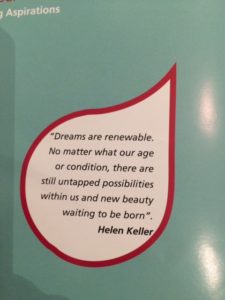
Thea finds great inspiration in certain quotes and now, instead of jotting a new quote down on the back of a piece of paper and stuffing it in a folder, Thea can add the image or type up the quote onto her Wiki and it is immediately uploaded and saved alongside her collection of inspirational words.

But a Wiki is more than just a scrapbook, it’s a representation of an individual’s wants, needs and aspirations.  It is their voice when they are unable to speak up for themselves. It is a reminder to doctors and professionals that this patient is a person.  “Having a Wiki allows me to communicate my person and character in a way that is meaningful to me. It helps others to understand how I like to be treated when I am unable to verbalise it for myself,” Thea explains.

A Wiki is also a reminder to the individual themselves that they can do it. It is a guideline that helps them to take care of their psychological and physical wellbeing. For Thea, the Wiki is an important tool. “My Health and Wellbeing plan has helped me to figure out how to live with all of these things and now I am working at a job that I love.  I feel quite proud of my Wiki. It’s not a self-indulgent thing but a compassion act towards myself.”

To view case studies about other users of the Rix Wiki, please click here.